


By Aaron Selkow, Owner/Director
I’ve been thinking a lot about character this week. Not because it’s suddenly become a topic around camp. Truthfully, it’s always been a topic around camp. It’s one of those things that, if you’re lucky enough to spend your life working with children, you can’t help but think about. After thirty-plus summers, I’ve watched thousands of campers grow up. I’ve seen children become teenagers, teenagers become adults, and adults become parents who now send their own children to camp. Somewhere along the way, I stopped paying attention to anything but the big moments. I started noticing the little ones. In fact, I’ve come to believe that the little moments are usually the ones that matter most.
The game-winning basket is exciting. So is the standing ovation at the end of the Camp Show. Rope Burn at Tribal. Community Campfire. Those are the moments that naturally become memories. They’re wonderful, and I hope every camper has plenty of them. But I don’t think they’re the moments that change children. I think children change in much quieter ways.
They change when they decide to move over on a bench at the Campitheatre so another camper has somewhere to sit. They change when they don’t make it to the top of the climbing wall on their first try but decide to give it another shot anyway. They change when they notice someone who looks lonely and invite them into the GaGa game. They change when they tell the truth after making a mistake, or when they discover that helping another person actually feels better than winning. Those moments happen here every single day. Most of them won’t ever be photographed. They won’t make the highlight video. They probably won’t even be remembered a week later. And yet, I suspect they’re the moments that matter most.
People occasionally ask me how camp builds character. It’s a fair question, although I’m not sure I love the way it’s phrased. The older I get, the less I think character is something anyone really teaches. We can certainly talk about it. Parents do. Teachers do. Coaches do. We do. We can encourage it, celebrate it, and recognize it. But I don’t think children become people of character because an adult gave a particularly inspiring speech. I think they become people of character because they practice.
And that’s one of the things camp does better than almost anywhere else. Parents spend years raising their children. Schools play an enormous role in helping them learn and grow. Camp doesn’t replace either of those things, nor should it. What camp offers is something different. Children spend all day together. They solve problems together. They disappoint one another. They forgive one another. They laugh together, eat together, clean together, lose together, succeed together, and wake up the next morning to do it all over again.
Every single day presents dozens of opportunities to make little choices.
- Will I include someone?
- Will I keep trying?
- Will I encourage a friend who’s struggling?
- Will I put someone else’s needs ahead of my own?
One choice doesn’t define a child. But thousands of those little choices, repeated over time, begin to shape the kind of person that child is becoming.
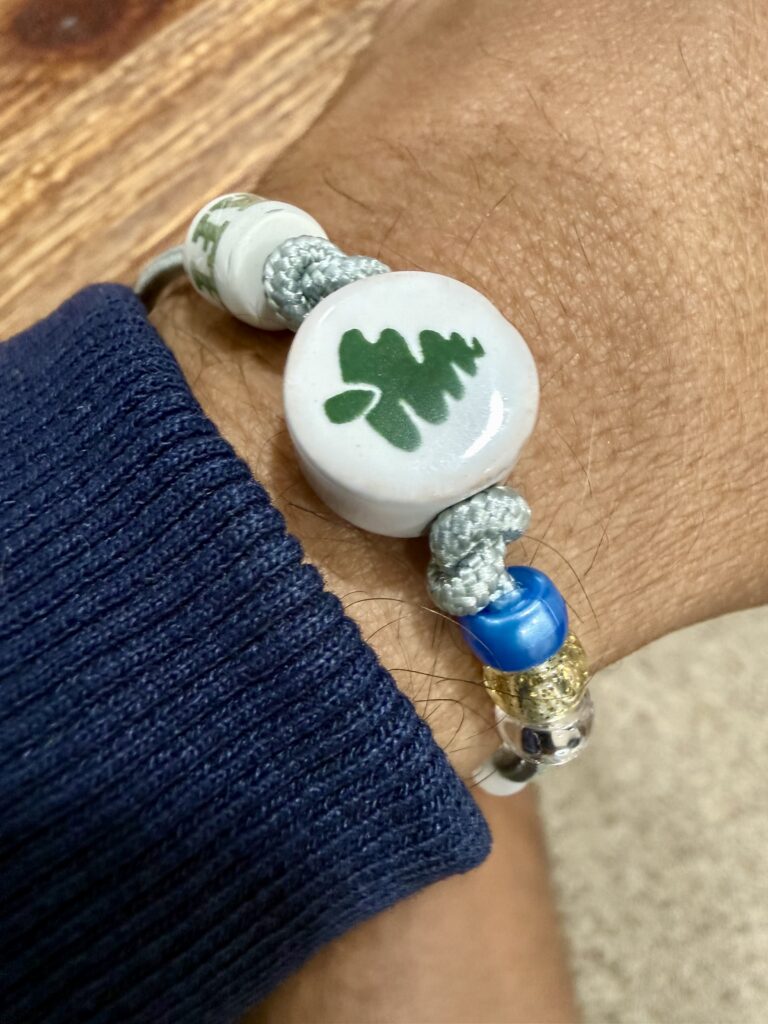
A few nights ago, I stood in our basketball stadium and introduced something new to our campers on behalf of our leaders (and a special “Shout Out” to our wonderful Wellness Team for being such a big part of the overall effort to rebuild our Character Development program this summer!). Every camper received a simple “Wear Your Character” bracelet. It’s nothing fancy. In fact, I hope by the end of the summer it looks like it’s been through camp. I hope it’s scratched, stretched out, and definitely dirty. Because the bracelet itself isn’t what matters. What matters is what it represents.
Throughout the summer, campers will have opportunities to earn three different Character beads (along with other special ones, such as those for their Tribal Team). Not because they’re the fastest runner, the best athlete, or the loudest cheerer. They’ll earn them because someone noticed the way they chose to show up. An Inspiration bead recognizes a camper who lifts someone else up. A Determination bead recognizes someone who keeps going when things become difficult. An Acceptance bead recognizes someone who helps another person feel like they belong. Those three words — Inspiration, Determination, and Acceptance — weren’t chosen by accident. Before camp began, our leaders spent a great deal of time talking about the kind of community we want Chestnut Lake Camp to be. We weren’t looking for a catchy slogan or a new program. We were trying to find simple language for things we’ve always believed mattered. The bracelet simply gives us one more way to notice those moments. And just as we were creating something new, our long-time campers and staff knew that this was also a tribute to the “old” Chestnut where beads were given to campers at times throughout the summer.
I’ve smiled over the last couple of days watching campers wearing their bracelets and being asked about the beads. Perhaps most importantly, they’ve begun to notice these character qualities in one another. That’s really the whole idea. Once children begin looking for inspiration, determination, and acceptance, they start seeing them everywhere. Better yet, they begin looking for opportunities to practice them themselves.
Last night we gathered for Tribal Campfire. Hundreds of campers and staff discovered whether they’re Minsi or Unami. They’ll soon receive their tribal beads and shirts, sing their songs, and officially become part of a tradition spanning many years for Chestnut Lake campers. People often think Tribal is about competition. It isn’t. Competition comes later. First comes belonging. I’ve always believed that’s one of the most important lessons we can offer children. Before we ask them to challenge one another, we make sure they know they’re part of something. Children who feel like they belong are more willing to take healthy risks. They’re more willing to fail. They’re more willing to try again. They’re more willing to cheer for someone else’s success because they aren’t spending all of their energy wondering whether they fit in.
One theme this summer is “It’s Always Summer”. For me, that has never meant trying to make summer last forever. It means believing that the best parts of camp don’t have to end when camp does. They can show up back at school, on a team, around the dinner table, in a college dorm room, or years later in a workplace or a family of their own. One day, those bracelets will wind up in a drawer somewhere. The cord will eventually wear out. A bead may fall off. I doubt many campers will remember exactly when they earned each one. But I hope they remember something more important. I hope they remember what it felt like to encourage another person. I hope they remember what it felt like not to give up. I hope they remember what it felt like to make someone else feel welcome.
Because those aren’t really camp lessons. They’re life lessons. And when I think about what I hope our campers carry home from Chestnut Lake, it isn’t just songs, cheers, traditions, or stories — wonderful as all of those things are. It’s the quiet confidence that comes from practicing, over and over again, becoming the kind of person they want to be. If we can help children do that, even just a little, then we’ve done something that reaches well beyond a summer in the Poconos.