
Campfire Tales | Seen

By Aaron Selkow, Owner/Director

Seen

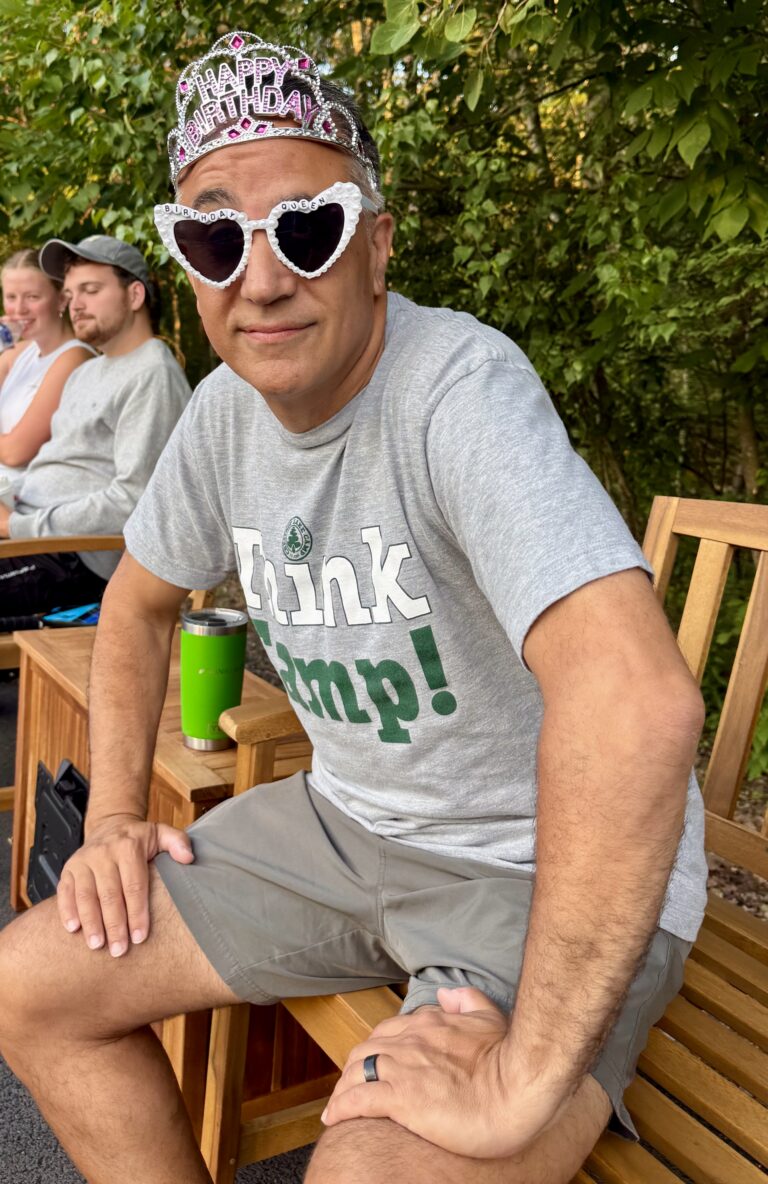
Yesterday was my 56th birthday.

When you’ve spent as much of your life at camp as I have, birthdays begin to feel a little different. By my count, I’ve now celebrated 51 of them at summer camp. It’s hard to imagine another place I’d rather be. There is something wonderfully special about spending your birthday surrounded by children who are laughing, counselors who are pouring themselves into making camp magical, and colleagues who have become part of our extended family. Throughout the day, I wore the same birthday shirt that every camper and staff member wears on their birthday. Hundreds of campers wished me a happy birthday as I walked around camp. There were songs, hugs, pictures, an incredible birthday cake decorated in Philadelphia 76ers colors, and even birthday cake for the entire camp at lunch. By any measure, it was a birthday I’ll never forget.

But none of that is what I’ve been thinking about today.

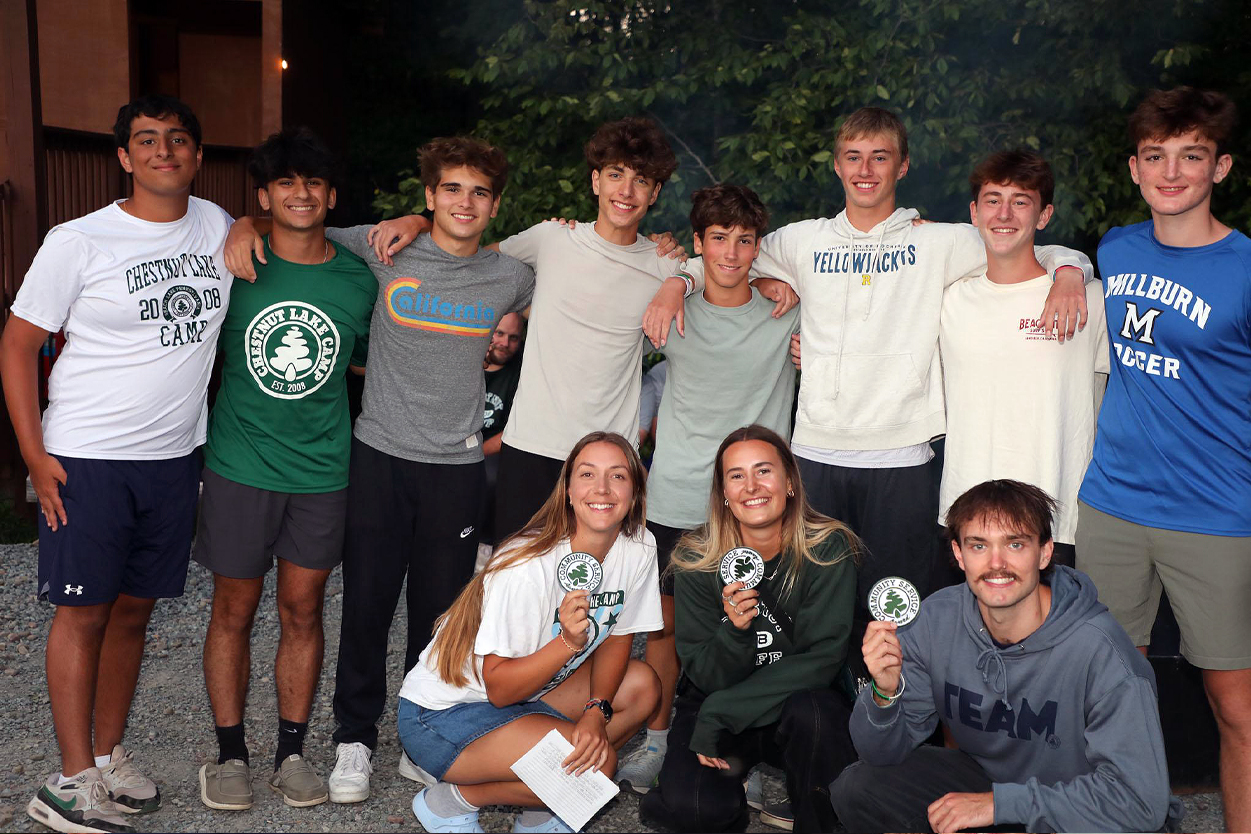
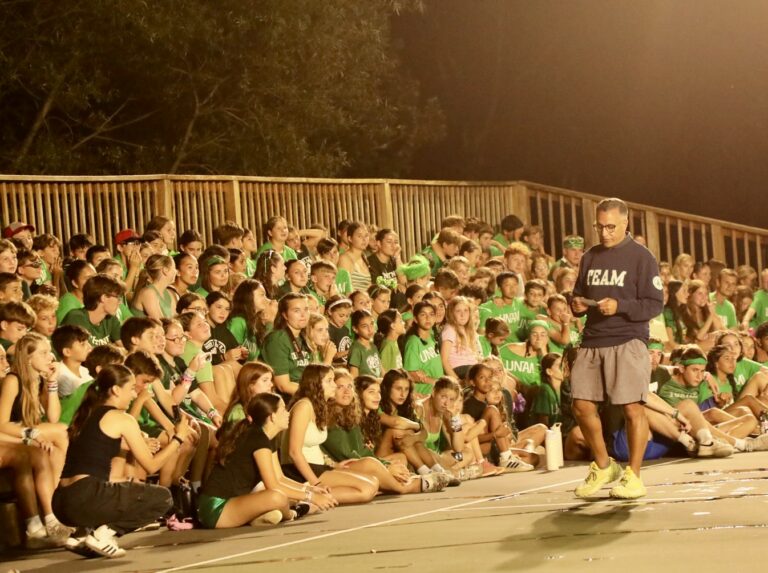
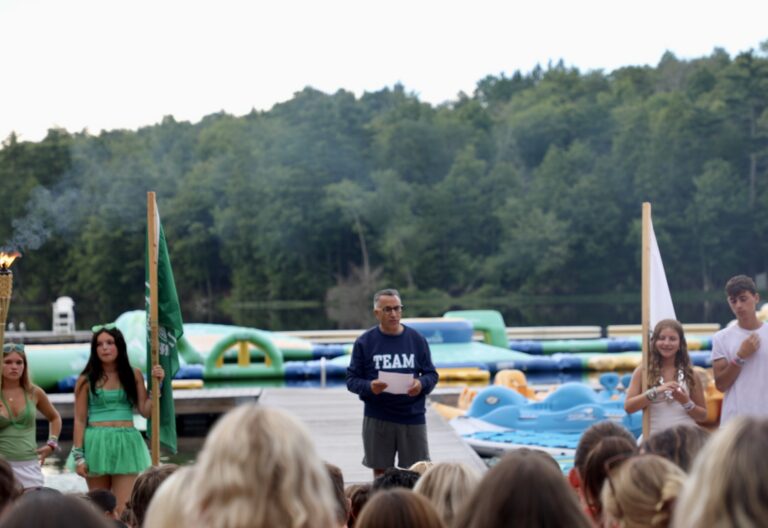
Last night, during our Friday night Community Campfire, I was invited on stage to receive a Community Service Award. It caught me completely by surprise. Over the years, I’ve quietly received a few nominations from campers, but they’ve always been handed to me privately. This time, because it was my birthday, one of our campers wrote something so thoughtful that our leadership team chose to read it in front of the entire camp. Standing there, I honestly wasn’t thinking very much about myself. Instead, I found myself thinking about what those awards have come to represent at Chestnut Lake.

Community Service Awards have become one of my favorite traditions, not because of the handful of names that are read aloud each Friday night, but because of the hundreds of names that aren’t. Every week, campers and staff members take a few quiet moments to recognize someone who made a difference in their lives. Sometimes it’s a counselor who offers encouragement when it’s needed most. Sometimes it’s a bunkmate who quietly welcomes someone new. Sometimes it’s a camper who demonstrates kindness when nobody else notices, or a staff member who simply makes another person’s day a little brighter. They write those nominations in their own handwriting, explaining why that person mattered to them. Our campus leaders select a handful to be shared publicly each week, but every single nomination is delivered to the person for whom it was written.

Think about that for a moment.

Even if your name is never read in front of the camp, someone still took the time to notice you. They saw something in you that mattered enough to sit down, think about it carefully, and put it into words. They wanted you to know that your kindness, leadership, encouragement, friendship, or compassion made a difference. In a world where so many young people wonder if they are truly seen, I can’t think of many more meaningful gifts than that.

As camp directors, Ann and I spend a great deal of time discussing some of the Chestnut Lake values, such as Character. Leadership. Confidence. We hope those words become more than posters on a wall or beads on a bracelet. We hope they become part of the way our campers think about themselves and about each other. The Community Service Awards have become one of the clearest expressions of those values because they don’t celebrate talent or popularity. They celebrate humanity. They remind us that the most important people in a community are often the ones who quietly make everyone else’s experience better. As I stood on that stage last night, I shared something with the campers that I have continued thinking about ever since.

If I can receive a Community Service Award, then every single person at camp can receive one. I don’t mean that modestly. I mean it sincerely.

The people making the biggest difference in camp aren’t usually the ones standing on stage. They’re the counselor who notices the camper who seems a little quieter than usual. They’re the division leader who spends an extra ten minutes helping a homesick child settle into bed. They’re the friend who scoots over on a bench at the picnic table in the Grove to make room for someone who looks like they need a place to sit. They’re the Varsity camper who takes a younger child under their wing. They’re the maintenance staff member who quietly fixes something before anyone knows it was broken, the nurse who comforts a frightened camper, the specialty counselor who celebrates a child for trying something difficult instead of simply succeeding. Those people make our camp what it is.

One of the things that has struck me most during this first week has been how often I’ve seen those moments unfold. I’ve seen them in our new garden program, where campers eagerly harvested food that, until recently, was just tiny seeds in the ground. I’ve seen them on the pickleball courts, where a group of campers at our first-ever Pickleball Specialty Camp yesterday refused to let the heat diminish their enthusiasm for a sport they are quickly falling in love with. I’ve seen them during evening programs, on athletic fields, in bunks, and simply walking from one activity to the next. The headlines of camp are often found in big events and exciting traditions, but the heart of camp has always lived in the small interactions between people who choose, over and over again, to make someone else’s day better. Perhaps that’s why the Community Service Awards mean so much to me.

They remind us to pay attention. They remind us that kindness is rarely loud. They remind us that leadership is often quiet. Most importantly, they remind us that every child deserves to feel seen.

This year we’ve decided to do something new. In the coming days, if your child received a Community Service nomination this week (whether it was read aloud at the Campfire or handed to them after the program ended), we’ll email it home for you to read. Long after the summer ends, I suspect those handwritten notes will become some of the most meaningful souvenirs they bring home from camp. As for me, I’ll carefully tuck my own nomination away with a handful of others I’ve received over the years. Not because I think I earned special recognition, but because every once in a while it’s nice to be reminded that someone noticed.

The truth is, that’s something all of us need from time to time. Whether we’re fifty-six years old or ten. Whether we’re the camp director or a first-year camper. We all want to know that somebody saw the best in us.

Campfire Tales | Our Stewardship

By Aaron Selkow, Owner/Director

There is something about these last few days before camp begins that I have never quite been able to explain. People often assume that because we’ve been doing this for a long time, Opening Day somehow becomes routine. They imagine that after nearly two decades at Chestnut Lake, and more than thirty years of professional camping between Ann and me, we simply check things off a list, welcome another group of campers, and watch another summer unfold.

The truth couldn’t be further from that.

In many ways, this is the most emotional week of the year for us. The anticipation is enormous. The excitement is real. There is an incredible amount of energy around camp right now because everyone knows what is coming. We know that in just a few days, buses filled with children will begin entering through our front gates. We know those buses will be carrying campers who have been counting down to this day since they climbed back on them last August. We also know they’ll be carrying children who have never been to camp before, who have spent the past several weeks wondering what their counselors will be like, whether they’ll make friends, whether they’ll fit in, and whether this place that everyone keeps talking about will eventually feel like home. We’ve spent an entire year preparing for that moment.

Sometimes people ask me what we do during the months when camp isn’t in session. I usually smile because it’s almost impossible to answer in a sentence. We hire staff, design programs, improve facilities, evaluate every aspect of the previous summer, rethink traditions, introduce new ideas, solve problems we didn’t even know existed a year ago, and constantly ask ourselves how we can make an experience that we already love even better. By the time staff training begins, most of those plans are already in place. And then something interesting happens.

During these last two weeks, all of those carefully constructed plans suddenly became secondary to something much more important. The conversations change. Instead of asking whether an activity will be fun enough or whether a schedule works efficiently, we begin asking questions about children. We talk about the camper who may be arriving, not knowing anyone else on the bus. We talk about the child who always appears confident but quietly struggles when no one is watching. We talk about homesickness—not as something to fear, but as something to understand. We talk about kindness, belonging, inclusion, patience, encouragement, and the thousand small interactions that determine whether a child simply attends camp or truly feels that they belong here.

I’ve realized over the years that this is what staff training is really about. Yes, counselors learn songs. Of course, they have their heads full of tons of information about child development and behavior management. They practice some fun skits. They prepare incredible activities. They review safety procedures and camp logistics until they become second nature. All of that matters, and it should. Parents should expect nothing less. But beneath all of those practical things is a much deeper conversation that we return to again and again.

These children belong to someone else.

I know that sounds almost painfully obvious, but I have learned that obvious truths deserve to be repeated. Every camper who arrives at Chestnut Lake is somebody’s son or daughter. Somebody taught them to ride a bicycle. Somebody stayed awake when they had a fever. Somebody celebrated every birthday, sat through every school concert, worried through every disappointment, and smiled through every success. Long before they became our campers, they became the center of someone else’s world. For a few weeks this summer, our families are trusting us with something precious. That thought never leaves us.

When Ann and I became parents ourselves, I think we understood this responsibility even more deeply. Raising your own child is one of life’s greatest privileges, but it is also wonderfully forgiving. None of us gets it right every day. We make mistakes. We lose our patience. We say the wrong thing, offer advice that isn’t particularly helpful, and occasionally discover that our children were wiser than we were. The beautiful thing about parenting is that tomorrow almost always offers another opportunity. Relationships grow over years, not moments.

Camp is different. We don’t have years to build trust. We may have just one summer.

That isn’t a source of pressure for us. It’s a source of perspective. It reminds us that every interaction matters because we don’t have the luxury of assuming there will always be another chance to make a first impression or to help a child through a difficult moment. We have to earn your trust from the very first day, and then continue earning it every day that follows.

Several years ago, I read Michael Thompson’s wonderful book Homesick and Happy. One of the ideas that has stayed with me ever since is his observation that children can be homesick and happy at the same time. At first glance, those emotions seem contradictory, but anyone who has worked with children knows they aren’t. A camper can miss home deeply while also laughing with new friends. They can wish Mom or Dad were nearby while simultaneously discovering that they are stronger, kinder, and more capable than they imagined. That isn’t a problem to solve. It’s childhood doing exactly what childhood is supposed to do.

More recently, I found myself reading Jonathan Haidt’s work about what he calls the importance of helping children spend more time in “discover mode.” His research focuses on many of the challenges facing young people today, but what resonated with me was something camp professionals have believed for generations. Children grow when they are given opportunities to discover things for themselves. Confidence doesn’t come from being told you’re capable. It comes from realizing you’re capable. Resilience isn’t developed because someone gives a lecture about perseverance. It develops because a child experiences something difficult, works through it, and discovers they can do hard things. When I think about camp through that lens, I realize that our work has never really been about activities. Activities are simply the setting. The real work happens in the relationships that develop around them. A child remembers the counselor who believed in them long before they believed in themselves. They remember the friend who invited them to sit together at lunch on the first day. They remember the division leader who noticed they were unusually quiet one evening. They remember laughing until they couldn’t catch their breath. They remember failing, trying again, and eventually succeeding at something they were convinced they could never do. Those are the moments that stay with people for decades.

As I walked through camp this morning, I found myself thinking about all of this. Everywhere I looked, people were working hard, but what struck me wasn’t how much there was still to do. It was why everyone was doing it. Nobody was painting a building because it needed paint. Nobody was reorganizing equipment simply because things should be neat. Nobody was reviewing a schedule because they enjoy moving blocks around on a spreadsheet. Every one of those jobs, no matter how ordinary it seemed, was ultimately connected to a child who would arrive here in just a few days. That’s what makes this work feel different. We aren’t simply preparing a place. We’re preparing to become temporary stewards of something that matters more to you than anything else in the world. I don’t use that word lightly.

Stewardship means caring for something that doesn’t belong to you. It means recognizing that what has been entrusted to your care is both precious and temporary. That’s exactly how we think about your children. They are not ours. They never will be. They belong to you, and at the end of the summer, they’ll climb back onto those same buses carrying new friendships, unforgettable stories, greater confidence, and, we hope, a deeper understanding of who they are becoming. Our responsibility is to help make that journey possible. Our privilege is that you’ve invited us to be part of it.

In just a few days, the buses will arrive, another Chestnut Lake summer will begin, and this remarkable place will once again be filled with the laughter, energy, friendships, and joyful chaos that have defined it for nearly nineteen years. We’ll welcome returning campers back to the place they already think of as home, and we’ll welcome first-time campers who have no idea yet that they are about to become part of something much larger than themselves.

Thank you for trusting us with the people you love most. We promise never to forget whose children they are.

Campfire Tales | Camp is a Gift

By Aaron Selkow, Owner/Director

For the first time this summer, nearly our entire staff community is together. Over the next week, these remarkable young people will participate in Staff Week as they prepare for the arrival of our campers. While campers and their parents are never physically present for moments like this, I have always believed that families should have a window into what happens here and understand the values, expectations, and purpose that guide our community. This evening, I spoke to our staff in the Campitheatre. Rather than summarize those remarks, I thought I would simply share them. What follows is the message I delivered.


Tonight feels different.

Not because camp starts tomorrow. It doesn’t. Not because everything is ready. It isn’t. And not because every member of our staff community is here yet. A few people are still finishing responsibilities at home and will join us in the days ahead. Tonight feels different because, for the first time this summer, we are almost all together.

Look around for a moment. The people sitting around you arrived at different times and for different reasons. Some of you got here just a few hours ago. Some have been here for days. Some have been here for weeks. A handful have been here since May. And while you may have arrived at different times, tonight is the first night we start to feel like one community. Before talking about what’s ahead, I think it’s important to recognize what it took to get us here. Our specialty counselors have already spent days preparing activity areas, training, planning programs, and learning how to lead their spaces. They are counselors first and foremost, but they are also helping create the experiences that will make this summer unforgettable.

Before them came many of our support staff — the people who help keep us healthy, the people who keep us safe, the people who maintain this beautiful property, the people who move equipment, transport people, solve problems, prepare meals, clean spaces, and do countless things that most campers will never even notice. And that’s exactly why their work is so important. Because when they are doing their jobs well, camp simply works. Some of those staff members have already been here for weeks, and I don’t think it’s possible to overstate how much they have accomplished. The food has been incredible. The spaces are coming together. The details are being handled. The place is starting to feel alive again.

And before them came our SUPES Team. For weeks now, they have been preparing to lead this community. Some are experienced educators. Some are coaches. Some work with children professionally. Some are still finding their path. But every one of them has chosen to be here because they believe in what this place can be. And that’s one of the things I want to talk about tonight: choice.

Because every person sitting here made one. You chose to be here. You could have spent your summer somewhere else. You could have taken a different job. You could have stayed closer to home. You could have chosen something easier. Instead, you chose this. And I don’t take that lightly.

When I look around this Campitheatre, I see people who will make a difference in the lives of others. Some of you will become teachers. Some of you will become coaches. Some of you will become parents. Some of you will work with children. Some of you will go into professions that have nothing to do with any of those things. But I have a feeling that many of you will spend your lives helping other people in one way or another. That’s one of the things that brought you here in the first place.

And if I’m being honest, when I was your age, I would not have necessarily seen any of that when I looked at myself. I certainly didn’t see a future camp director. I wasn’t studying education. I wasn’t preparing for a career working with children. I wasn’t building some master plan that would eventually bring me here. Truthfully, I was mostly interested in sports. School was something I did. Athletics were what mattered. And camp? Camp was just where I kept showing up.

I started as a camper when I was five years old. I turned six during my first summer. Then I just never really left. Not because I had some grand vision. Not because I knew what camp would eventually mean to me. Mostly because I didn’t know anything else. Many of you are actually more thoughtful about this than I was. You applied for this. You interviewed for this. Some of you traveled halfway around the world to be here. Some of you chose Chestnut Lake because someone you trust told you this place was special. I love that. I respect that. And I also know that, in some ways, it means you are starting with more intention than I did.

Over time, I got better at camp. I became a decent counselor. I learned how to run programs. I figured out some things. But one of the most important summers of my life wasn’t spent teaching basketball or running activities. It was spent working in the camp kitchen. And looking back, that summer changed everything. Because when you’re responsible for taking care of people, you learn humility pretty quickly. You learn that communities don’t function because of one person. You learn that every job matters. You learn that taking care of other people is hard work, meaningful work, sometimes thankless work, and incredibly important work.

Without that experience, I’m not sure I’d be standing here tonight. I don’t know that I would have understood what it really means to lead a camp, because it’s not just about standing in front of people. It’s about noticing what has to be done and being willing to do it. It’s about caring when no one is clapping. It’s about understanding that the smallest details can make another person feel seen, safe, and cared for. Because of that, I think I understand at least a little bit of what some of you may be feeling. Maybe you’re excited. Maybe you’re nervous. Maybe you’re wondering whether you’re ready. Maybe you’re sitting here thinking, “What exactly have I signed up for?”

At some point during the next few weeks, almost every person sitting here is going to have a moment when they think, “I have no idea what I’m doing.” And when that moment comes, I want you to know something: That’s normal. It’s supposed to happen. None of us started with all the answers. Not me. Not the people leading this camp. Not the people sitting beside you. The goal is not perfection. The goal is growth. The goal is effort. The goal is to show up every day and try to become a little bit better than you were the day before. That’s what we’re asking of you. We’re asking you to care. We’re asking you to try. We’re asking you to put children first. We’re asking you to live the values of this community. Not because we expect you to be perfect, but because we believe you are capable of being extraordinary.

And yes, you are going to make mistakes. I hope you do. Because mistakes usually mean you are trying. Mistakes usually mean you are stretching yourself. Mistakes usually mean you are putting yourself in a position to learn. We will help you through mistakes. We will teach through mistakes. We will grow through mistakes. What we will not accept is indifference. What we will not accept is choosing not to care. Because these children deserve adults who care deeply.

Now there’s something else I want you to understand about this place. Many of you came here because someone recommended Chestnut Lake Camp. Somebody told you this was a special place. Somebody told you this was where you should spend your summer. Or maybe the greatest staff recruiter in history, Sam Roberts, looked into your eyes — which felt like he was seeing clear into your heart — and made you feel like you needed to come to Chestnut to fulfill your destiny. When people hear that about a place — whether from friends or from members of our leadership—they often assume it has been that way forever because it sounds ideal. They assume, because of that, that it is finished. They assume it is complete. They assume somebody else has already built all of it and that coming here will mean jumping into a place that is fully formed.

But that’s not true. Some of you may not even realize that our first summer wasn’t until 2008. When people talk about Chestnut Lake Camp today, they often talk about it like it’s always been here. Like it’s been around forever. But it hasn’t. Nineteen years ago, there wasn’t much here. There were ideas. There were dreams. There was hard work. There were people willing to believe that something special could exist. Every summer since then, another group of people has added something — a tradition, a program, a friendship, a culture, a standard, a memory, a story. Some stayed for one summer. Some stayed for many. But every one of them left fingerprints behind.

And tonight, you become part of that story. You didn’t come here to observe it. You came here to write part of it. Chestnut Lake Camp is not finished. It is still growing. It is still becoming. And now you are part of what comes next. Years from now, there will be counselors sitting exactly where you are sitting tonight. They will benefit from traditions you helped strengthen, programs you helped improve, relationships you helped build, and culture you helped shape. They may never fully know your name. But they will experience your impact, just as we are still experiencing the impact of those who came before us. That’s how communities work. That’s how legacies are built. One summer at a time. One person at a time. One choice at a time.

And that brings me back to where I started: Choice. Because years from now, when you think about this summer, I don’t think you will remember every schedule. You won’t remember every meeting. You won’t remember every training session. What you will remember are the people, the moments, the challenges, the growth, the laughter, and the feeling that you were part of something bigger than yourself.

I’m 55 years old. I’ve spent more than thirty years doing this work. And when I think about camp, I don’t just think about this summer. I think about summers long ago. I think about the people who shaped me, the lessons they taught me, the confidence they gave me, the responsibility they trusted me with, and the ways camp helped me grow up. When I was your age, I thought camp was a place. At 55, I know better. Camp isn’t a place. It’s a gift.

It’s a gift that keeps unfolding. The lessons don’t arrive all at once. The impact doesn’t arrive all at once. You discover pieces of it years later. You discover it when life gets hard. You discover it when someone depends on you. You discover it when you are asked to lead. You discover it when you are raising a family. You discover it as you try to figure out who you want to be. I opened that gift a long time ago. And somehow, after all these years, I’m still finding things inside it. That’s what I hope for you. I hope you have a great summer. Of course I do. I hope you make memories. I hope you make friends. I hope you make a difference for children.

But more than that, I hope this experience stays with you. I hope thirty years from now you can still feel it. I hope thirty years from now you are still benefiting from it. I hope thirty years from now you can point back to a summer in Beach Lake, Pennsylvania, and say that somehow, in ways you couldn’t have understood at the time, it helped shape who you became.

So on behalf of our leadership team, our year-round staff, our seasonal leaders, and my family — Ann, Lily, Pearl, and me — welcome. You chose this place. Tonight, we’re choosing you too. Welcome to Chestnut Lake Camp. Welcome to Beach Lake. Welcome home.

Now let’s get to work.

Campfire Tales | Before the Campers Arrive

By Aaron Selkow, Owner/Director

As I write this, we’re still more than two weeks away from Opening Day. The bunks are waiting. The lake is quiet. The athletic fields are green and ready. There are projects still underway, schedules still being refined, and a seemingly endless list of details that need attention before the first buses arrive at Chestnut Lake. To most people, camp hasn’t started yet. But the truth is, camp has been underway for quite some time. Remember…It’s Always Summer.

Some members of our leadership team arrived in early May. Together, we’ve spent the past several weeks preparing every corner of camp for the summer ahead. We’ve hired staff, planned programs, reviewed procedures, solved problems, walked the property countless times, shared information about the amazing campers still to arrive, and worked through thousands of decisions — most of which campers and parents will never see, but all of which help create the experience they will soon enjoy. The past week marked another important step in that preparation.

Nearly fifty members of our leadership team (which we refer to as the “SUPES” here, who are part of the larger “Blue Team” of adult staff) gathered for five days of intensive training. We spent long days together discussing leadership, child development, communication, supervision, safety, culture, and the tremendous responsibility that comes with helping shape a child’s summer. There were presentations. There were discussions. There were role-plays. There were moments of laughter and moments of reflection. And there was the exercise that we closed with, which has truly resonated for me.

Our supervisors gathered around a large drawing of a “SUPE” and answered a simple question: “What kind of leader do you want to be this summer?”

Each supervisor was asked to consider their own answer to that question. And after we shared them all, with more than 200 affixed to the wall, I invited each of the leaders to select one written by another person and place it on the drawing of a “SUPE”. It was important that they chose one from another team member, because while each of us will aspire to meet our own goals, this team’s success will be marked by how well it supports others. Their choices quickly filled the flip-chart sheet.

Present. Approachable. Consistent. Proactive. Impactful. An active listener. Someone people can trust. Someone who makes a positive difference. Someone campers and staff can come to when they are struggling. Someone who is constantly learning and adapting. One note simply read: “I want to make a difference.”

As I stood there looking at the wall, I found myself thinking about some things that weren’t written. Nobody wrote, “perfect.” Nobody wrote, “finished.” Nobody wrote “expert.” Instead, what covered the page were qualities that require intention. Qualities that require effort. Qualities that require practice. Qualities that require growth. And that’s when I realized that the exercise wasn’t really about leadership. It was about becoming.

There has been a lot written recently about young people, confidence, resilience, independence, and anxiety. Much of it centers around an important question: “How do children become confident?” For years, many of us assumed confidence came first. Then came the challenge. But experience tells us something different. Confidence often comes after the challenge. Confidence comes from discovering that you can do something difficult. It comes from walking into a bunk where you don’t know anyone and somehow finding your place. It comes from climbing higher than you thought you could. It comes from speaking up when you’re nervous. It comes from trying something new. It comes from making a mistake and realizing you can recover from it. It comes from being homesick and making it through the day. It comes from failing, learning, adjusting, and trying again. And eventually, looking back and realizing that you’ve become stronger than you ever were before.

That is what camp has always offered children. Not a summer free from challenge, but a summer filled with the right challenges. The kind that help young people discover what they are capable of. One of the things I love most about leadership training is that it reminds us that growth isn’t reserved for children. We spend a great deal of time talking about how to help campers become more confident, more resilient, more independent, and more connected. But the adults in the room are engaged in that same work themselves. Before we ask campers to step outside their comfort zones, we do the same. Before we ask campers to learn resilience, we practice resilience. Before we ask campers to grow, we commit ourselves to growth as well.

The photo accompanying this Campfire Tale was taken at the conclusion of that exercise. What you’re looking at isn’t a strategic plan or a list of responsibilities. It’s a collection of aspirations. Nearly fifty leaders identifying the qualities they hope to embody this summer. What I find most reassuring about that isn’t that they have all the answers. It’s that they continue to ask the right questions. How can I be better? How can I serve others more effectively? How can I help someone feel seen? How can I make a positive difference? The best leaders I’ve known have never acted as though they had everything figured out. They simply remained committed to becoming better versions of themselves. Perhaps that’s one of the greatest lessons camp has to offer. Growth isn’t something we finish; it’s something we practice.

Every summer, children arrive at Chestnut Lake as works in progress. They leave as works in progress, too. The difference is that somewhere along the way, they discover new strengths, new friendships, new confidence, and new reasons to believe in themselves. The same is true for all of us. So here we are, a little more than two weeks before Opening Day. The campers haven’t arrived yet. The songs haven’t been sung. The games haven’t been played. The campfires haven’t been lit. But growth has already begun.

And if the conversations, commitment, and heart I’ve seen from our leadership team over these past several weeks are any indication, this community is ready for a remarkable summer.


Campfire Tales quilt graphic featuring camper t-shirts and traditions at Chestnut Lake Camp

Campfire Tales | Stitched Over Time

By Aaron Selkow, Owner/Director

I was going through my closet at home the other day.

It was one of those projects that lingers — not because it’s complicated, but because it’s personal. Ann knew that. She was patient and encouraging, understanding that cleaning out my closet wasn’t just about making space. It was about deciding what parts of my past I was ready to hold differently.

We’ve lived in this house for about twenty years. I’ve spent thirty-three years in camp leadership. And if I really count it all — as a camper, a staff member, and a professional — I’m closing in on fifty summers at camp. That’s a lot of living. And, as it turns out, a lot of T-shirts.

Camp-branded clothing accumulates quietly. Year by year. Summer by summer. Before you know it, you’re standing in front of shelves filled with fabric memories: staff shirts, leadership gear, so many hats, apparel tied to traditions, themes, moments that once felt all-consuming and now live somewhere deeper.

Over the years, I’ve tried to be intentional. When I left Pinemere Camp — the camp where I grew up as a child and later served as director for many years — I gave away shirts and sweatshirts so they could keep being used. I did the same when I left Camp Harlam after nine years as a leader. And once I leave a camp, I stop wearing those shirts entirely. It wouldn’t feel right for me, as the director of Chestnut Lake Camp, to be running errands or standing on the sidelines at a soccer game in apparel from another chapter of my professional life.

Still, I kept more than I needed.

And when I finally sorted through what remained, I noticed something interesting — not just what I kept, but what I didn’t.

Some shirts didn’t make the cut because, frankly, they don’t hold up. Designs that felt clever at the time now make me cringe. Graphics that, looking back, border on inappropriate. Slogans that were well-intentioned but poorly thought through. A few that would probably make an intellectual property attorney pause at my willingness to “borrow” inspiration without fully thinking through the implications.

Those shirts are part of my story, too. They reflect mistakes. Blind spots. A younger version of myself still learning — sometimes clumsily — how creativity, humor, leadership, and responsibility intersect. I didn’t keep them because growth means recognizing that not everything deserves to be preserved in the same way.

What struck me most, though, was how worn the shirts I did keep were. These weren’t pristine keepsakes. They were faded. Softened. Stretched. Stained in places I couldn’t quite identify anymore. They had lived camp alongside me — through long days and longer nights, unexpected rainstorms, high-energy moments, quiet conversations, staff meetings, campfires, and the thousands of ordinary moments that turn out not to be ordinary at all.

In that way, the shirts didn’t just represent camp. They experienced it.

After everything was sorted, folded, and set aside, I looked at the shirts that remained and realized I wanted to do something with them — something more meaningful than putting them back on a shelf. I decided to have several of them made into a quilt. The quilt will include 24 shirts from all three camps I’ve led. Different colors. Different eras. Different design styles. Nearly all of them shirts I designed myself, which has always been one of my favorite creative outlets. Each one tied to a particular moment, group of people, or unique camp season.

Lying them out together, they felt less like memorabilia and more like relationships.

Some were joyful and easy. Some were complicated. Some belonged to chapters that shaped me profoundly, even when I didn’t realize it at the time. They don’t all match. They weren’t meant to. But stitched together, they tell a coherent story — not of perfection, but of commitment, evolution, and care.

There’s a line often attributed to Maya Angelou: “Do the best you can until you know better. Then when you know better, do better.” That feels right here. Camp — at its best — gives us the space to do exactly that. To try ideas. To build traditions. To learn from missteps. To grow alongside the people who we’re leading. When the quilt is finished, it will tell a story. Not neatly. Not chronologically. But honestly. And camp works the same way.

What campers take home from Chestnut Lake won’t be a quilt. But it will be something stitched together quietly over time: friendships, confidence, independence, resilience, lessons learned through both success and struggle. Pieces that may not fully make sense on their own, but together form something strong, warm, and lasting.

Fifty summers later, that’s what I see when I look at these shirts — both the ones that made the quilt and the ones that didn’t.

A life shaped by camp.
Worn in.
Learned from.
And still growing.

Campfire Tales | It’s Always Summer

By Aaron Selkow, Owner/Director

A few weeks ago, I got a message from the parent of one of our Varsity campers from last summer. It was short and straightforward — just a note she thought I’d appreciate. Her daughter and a few of her friends at school had started a fundraiser for SCOPE. This organization helps make camp possible for kids who otherwise wouldn’t have the chance to go (our Varsity campers run SCOPE activities at camp as part of their leadership program). The teens had made posters, secured a table at their school’s Friday night event (where I happened to be as a coach for the same school’s girls’ soccer team), and were selling pizza to raise money. The mom wrote, “She wants me to tell you to come buy some pizza — she’s proud that the kids are so into SCOPE.” I stopped by. And sure enough, she was beaming. When she saw me, she shouted, “We’ve already raised $237!”

At that moment, I felt something that everyone who loves camp knows deep down: the best parts of summer don’t stay behind when the buses pull away. They follow us home.

A few days earlier, Sam Roberts — our Director of Staff & Camper Experience — told me about a conversation with one of our returning counselors. This staff member is back at college now, juggling classes and a part-time job. Some of his friends had been asking how he stays so calm under pressure — how he learned to lead and connect with people the way he does. He laughed and said, “Try being responsible for a cabin of ten eleven-year-olds for four weeks.” Then he paused and added, “I really do miss it — and I use it every day.”

These moments — a proud parent’s message, a counselor’s quiet reflection — are reminders of what I’ve been feeling since the summer ended. They’re proof that what we build together doesn’t fade when camp ends. It keeps showing up — in the choices, confidence, and compassion that our campers and staff carry into their everyday lives.

That’s what we mean when we say It’s Always Summer. It’s not about weather, or nostalgia, or pretending the season never ends. It’s about what lasts because of camp — the sense of belonging, purpose, and joy that sticks with us long after the last campfire.

For me, It’s Always Summer has become a promise — a reminder that our work as leaders, mentors, and friends continues year-round. When a Varsity camper raises money so that another child can go to camp… when a counselor uses what they learned at Chestnut Lake to lead with patience and heart… when a family tells us their child is still singing the alma mater at breakfast — those are the signs that the fire is still burning.

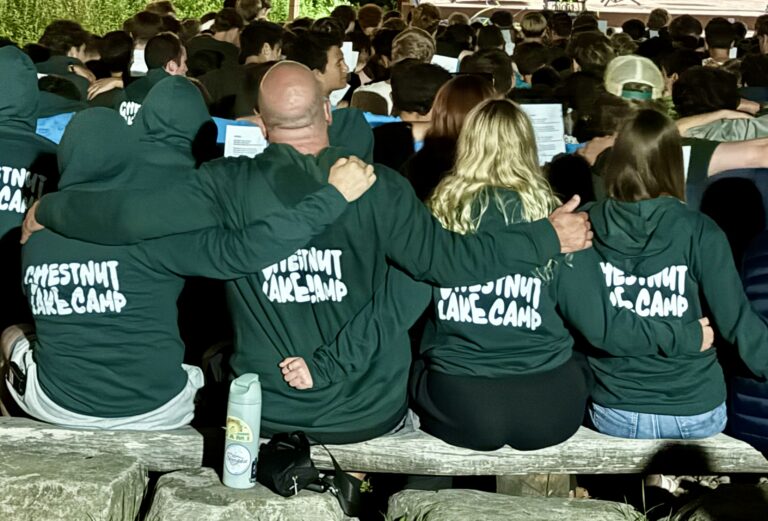
And if you look closely, you can see it everywhere. In the hoodie a camper wears to school. In the smile of a staff member walking into the Winter Reunion. In the plans, we’re already making for the summer of 2026. Because what happens at Chestnut Lake isn’t confined to a season. It starts here — but it belongs everywhere.

So as we look ahead, let’s carry that same warmth, the same belief in people, and the same spirit that fills our camp days. Because at Chestnut Lake — no matter the month, no matter the weather — It’s Always Summer.

Campfire Tales | One for the Books (8/16/25)

By Aaron Selkow, Owner/Director

There’s a certain hum that fills camp in the final week — a sound that’s equal parts joy, exhaustion, and an unspoken understanding that these days are numbered. It’s the laughter that carries across the fields at dusk, the way voices in the dining hall hit a slightly higher pitch, and the quiet conversations between friends who know they’re about to be apart. It’s the sound of a summer’s worth of living, pressed into its final pages.

Over the past seven weeks, 654 campers have called Chestnut Lake home, and 246 staff members have poured themselves into making sure those campers had a summer they’ll carry forever. That’s thousands of moments spent connecting, millions of footsteps across camp, and more than a few well-timed reminders to “please put your sneakers on before going to tennis — Crocs are not good enough.”

We’ve come a long way since the start of Second Session. Back then, the new campers were figuring out the map of this place — not just where things were, but where they belonged in it. In those early days, I wrote about how campers grow; constantly grow — but watching it happen is still like magic every time. The kid who could barely meet my eyes when they stepped off the bus is now belting out the Alma Mater at the top of their lungs (especially the “I’m Chestnut ‘til I die…” part at the end). The first-time counselor who thought “leading a bunk” meant giving orders learned quickly that it’s about listening, laughing, and sometimes sitting quietly with a camper who just needs to be heard.

We had plenty of the headline events. Tribal returned with all its energy — a few days when camp split into Unami and Minsi, competed like their lives depended on it, and then hugged like nothing had ever been at stake. We had our helicopter landing, our massive fireworks, our banquets, our talent shows (some of which redefined the word “talent” in ways I’m still trying to process). These are the moments that make the photo albums and the highlight videos.

However, as I wrote in an earlier blog post, the important information is often found in the spaces between. In the quiet moment before a bunk takes the stage. The counselor who notices the homesick camper before anyone else. The smile that spreads across a camper’s face when they finally hit the target, make it to the top of the climbing wall, or just realize that they belong here.

There’s a saying in Michael Thompson’s Homesick and Happy: “Camp is not built on the big events, but on the thousands of small human exchanges that make children feel known, valued, and part of something larger than themselves.” I think about that when I remember:

  • The camper who was too nervous to get in the lake on day one but, by week two, was racing to the Wibit with friends.
  • The inside jokes born in bunks that make absolutely no sense to anyone outside them (and shouldn’t).
  • The counselor who stayed up late helping a camper write a letter home that expressed feelings they hadn’t yet been able to share (and the parent who called me, thrilled to have received it).
  • The look of relief and pride on a camper’s face when they nailed a skill they’d been working on all summer, finishing a beautiful ceramics project to bring home.

Writers have been trying to put the magic of camp into words for decades. In The Summer Camp Handbook, Jon Malinowski and my good friend Chris Thurber write: “Camp is a place where you can be your truest self — because everyone else is, too.” That’s been true here every day this summer. My colleague Steve Baskin once quoted a camper who told him, “In three weeks here, I got back so much of the confidence I’d lost.” I’ve seen that in our campers this summer — the return of confidence, the discovery of independence, the joy of finding a place where they are free to be fully themselves. And Lenore Skenazy, in an article for Let Grow, said it plainly: “Camp works because it gives kids a community, a purpose, and the space to try.” This summer, our kids tried everything — from the high ropes to waterskiing to making up an original dance or song in front of hundreds of people. And whether they succeeded or not, they were braver for trying.

In the years to come, we’ll remember the big events. But what will stay with us — the thing that makes this summer unforgettable — will be the people. The 800 individuals who trusted us with their summer, and the friendships that will outlast the tan lines sure to fade as everyone leaves through the Main Gate soon.

As we pack the duffels and watch the buses pull away, I’m reminded of what Anne Lamott once wrote: “Lighthouses don’t go running all over an island looking for boats to save; they just stand there shining.” Ann and I feel it’s our mission — joined by an exceptional team of professionals and seasonal leaders — to be that lighthouse, standing firmly on a foundation of commitment to excellence and integrity, ensuring that every child and adult who arrives and departs knows how to find their way with our never-ending light. This summer, Chestnut Lake shone.

Soon, everyone will be home. The days will be quieter. Laundry will get done (eventually). And then, after the grass at camp has regained its green luster following a summer full of fun, someone will text a bunkmate a random emoji, and the whole summer will come rushing back. Because Chestnut Lake isn’t just a place. It’s a feeling. It’s a community. Likewise, it’s proof that under the open sky, surrounded by friends, we grow. And those moments of growth will be etched into our minds and souls forever.

So thank you — campers, staff, parents — for making this summer one for the books. Now, go home, tell your stories, and start counting down the days to next summer.

Campfire Tales | Real Leadership (8/8/25)

By Aaron Selkow, Owner/Director

We’re six weeks into camp, and at this point in the summer, I’ve seen enough to be reminded that leadership here doesn’t always look like a keynote speech or a flawless plan. Sometimes it looks like a Mato camper sprinting toward the end zone, clutching the football like a hot potato as he realizes he’s about to score for the first time. Or a Wakanda camper showing plate discipline, drawing a walk to score a run in a big inter-camp game. Or even a Varsity camper putting their arm around a friend and quietly helping them through a tough moment in the middle of an up-and-down day.

We are two-thirds of the way through this session — and six-sevenths of the way through the summer — and what’s been built here is more than schedules, programs, or Tribal points. We’ve built leaders. Some of them are 9 years old, some are 19, and some are staff members who didn’t even realize they had it in them until now.

When I wrote an article for Camping Magazine a few years ago, I admitted that my camp-director “skills” were, well, eclectic:

  • I can spin a basketball on my finger.
  • I can referee seven different sports, design a T-shirt, format a newsletter, drive a 26-foot box truck, and properly stern a canoe.
  • I can mount a framed photo without a ruler, and I’ve repaired both a window screen and a meaningful relationship more than a few times.

Some of these, I’ll admit, I’ve probably gotten too good at, while struggling to improve at things that might matter a bit more to camp’s success (and my own). Others — like belaying on the high ropes course, driving the golf cart without an actual key, or calming a parent who isn’t getting the answer they want — I’ve learned out of necessity.

This is the thing about leadership at camp: it’s not just about what you set out to learn. It’s about what the job throws at you — and how you handle it. Carol Dweck calls it a “growth mindset,” the belief that abilities can be developed through dedication and hard work. Camp is essentially a graduate course in that regard. You wake up, step outside, and something — often unexpected — will come your way that you’ll need to figure out.

I’ve seen that same pattern in our campers and staff this summer:

  • The counselor who ran a fantastic Arts & Crafts activity with pure enthusiasm — even though the supply order they’d been counting on never arrived.
  • The older camper who volunteered to be goalie in soccer for the first time and then stopped two penalty shots in one game.
  • The first-time campers who stood on stage at our Community Campfire and spoke beautifully about a new friend being honored with a Community Service Award — even though they’d met less than a week before.
  • The bunk that secretly made friendship bracelets for their counselor, who was missing home, just to make sure she knew how much she mattered here.

These moments don’t happen because someone read a manual on leadership. They happen because we’ve built a community where people jump in, try, fail, adjust, try again — and where those actions are noticed and celebrated.

Now comes the final stretch. This is when leadership matters most — when routines are second nature, when it would be easy to coast. This is the time to double down: to lead loudly by cheering your team through the last Tribal event (which could break at any moment), and to lead quietly by spotting the camper sitting alone and inviting them into the game.

I’ve been doing this for a long time, and I can say without question that I’m already the luckiest I can be. Luck got me here, but leadership — mine, and yours — is what keeps making this place extraordinary.

So let’s finish strong. Let’s add a few more skills to our tool belts, a few more stories to our highlight reel, and a few more moments where someone surprises themselves with what they’re capable of. That’s how leaders are made here — one unexpected challenge, one person doing something special to make a difference, and one great camp day at a time.

Campfire Tales | Counselors They’ll Remember (8/1/25)

By Aaron Selkow, Owner/Director

There’s a very particular kind of magic in the air at Chestnut Lake right now. Week 5 is a moment of beautiful tension — a balance of beginnings and endings, of fresh starts and deep roots. On one hand, we welcomed a brand-new wave of Second Session campers just four days ago — wide-eyed, eager, and ready to dive into everything. On the other hand, we have an amazing group of Full Summer campers who are now already five weeks into their journey — seasoned, confident, and now serving as bunk leaders, torch-bearers of tradition, and quiet mentors for the newer kids.

This week also marked the start (and conclusion later today) of Discovery Camp, a special five-day experience designed for younger campers to dip their toes into the Chestnut Lake experience. These sixty kids packed a full summer’s worth of excitement into less than a week — and now head home with paint on their arms, songs in their heads, new friendships formed, and hopefully, the start of a long camp story that’s just beginning. All of these experiences — the firsts, the middles, and even the goodbyes — are different. But they are all rooted in the same core truth:

Camp is about connection. And that connection is so often made real through one person: a counselor.


I’ve told this story before, but it feels especially important right now.

It was 1982. I was twelve years old. It was another summer at my camp, and what I wanted more than anything in the world was a pair of high-top Converse Weapon basketball sneakers — not just any pair, but the exact pair that my counselor Todd wore. Looking back, I didn’t really want the sneakers. I just wanted to be like him.

Todd was from Maryland, and he would someday become an attorney — a world away from my home in Philadelphia, where my future career plans had me playing point guard alongside Andrew Toney for the Sixers. He was charismatic and brilliant, a tennis player who somehow knew everything about music, politics, and the world. He told stories that made you sit up straighter. He played Grateful Dead tapes and talked about Israel and Europe like someone who had been places. He went to Emory, and he had a girlfriend.

He wasn’t perfect. But Todd had a kind of gravity to him. When he spoke, you listened. When he asked you how you were doing, he seemed to actually mean it. He didn’t talk down to us. He didn’t perform. He showed up — again and again, every single day — and made us feel like we mattered. He was the first person outside my family who made me feel truly seen.


Fast-forward to now — July 2025, Week 5 at Chestnut Lake. This week, I watched a first-time camper cry on the first night — missing home, overwhelmed, unsure. One of our counselors sat beside him for almost an hour, gently coaxing out a smile. That same camper led the cheers the next morning at Flag Football when his team scored the tying touchdown. I saw a Discovery Camper nervously eyeing the Aqua Park (Wibit), uncertain she could make it even off of the dock. Her counselor — all encouragement, no pressure — offered a quiet “you’ve got this.” That camper made it to the top of “Number 4” and jumped off into the water without a care in the world.

And I saw a few Full Summer campers who now are the Todds — sitting at picnic tables at Chestnut Commons with some old and new campers, laughing, explaining the difference between Varsity-1 and Varsity-2 (I heard some true things and some that were not…I opted to let it slide because they were having fun), and modeling the kind of connection that campers who have been at Chestnut for at least a few summer understand and value.

And then there are the counselors.

The job of a counselor is, in some ways, impossible to explain and impossible to overstate. They are substitute parents, older siblings, life coaches, cheerleaders, conflict mediators, teachers, and buddies— often all in the same day. They stay up late and get up early. They deal with bug spray and homesickness, group dynamics and lost water bottles. They lead chants and tie shoes, teach life lessons and wipe away tears.

And while they may not realize it yet, they are shaping memories that your children will carry with them for decades. There are kids here at Chestnut Lake this summer — right now — who have already decided that they want to come back someday not just as campers, but as counselors. And not because it looks easy. Not because it’s always fun. But because they see the impact being made on them, and they want to pass that forward. That’s the counselor effect. That’s what Todd gave me. That’s what I see happening here every day.


I’ll never forget the day that summer ended in 1982.

The session ended, as it always does, too soon. Most of us filed out with high-fives and half-smiles, not sure how to say what we were feeling. I was the last to leave my bunk, dragging my feet, holding back tears. Todd saw me. He walked over, hugged me (maybe the first real hug I ever got from a male role model who wasn’t family), and told me he was proud of me. He reminded me of what I’d done that summer — what I’d learned — and then he disappeared into the sea of counselors and trunks.

Many hours later, when I unpacked at home, I found his red and white Converse sneakers in the bottom of my bag. He had left them there. No note. No fanfare. Just a life-altering gesture. That summer — and that counselor — never left me. They’re part of the reason I do what I do now.


And so when I look around Chestnut Lake in Week 5, I know exactly what I’m seeing. I’m seeing lives being changed. I’m seeing futures being shaped. I’m seeing kids who, someday, will talk about this summer. About this camp. And about these counselors.

Here’s to a great last couple of weeks!


Campfire Tales | This Camp. These Kids. This Summer (7/25/25)

By Aaron Selkow, Owner/Director

Tomorrow morning, campers will drag themselves out of bed after a terrible night’s sleep, pack away their special Banquet gift, look once more for their favorite hat that’s been missing since the day that they hopped off the bus, and say goodbye to the place they’ve called home for the past four weeks. There will be tears for some, and more than a few “see you next summer” fist-bumps and hugs.

After the rush of departures, more than 100 campers will stay behind — trying to recover from the disappearance of their friends in time to greet their families for Visiting Day. And while there’s still plenty of summer ahead, this moment — the close of First Session — deserves to be held up, honored, and shared.

Because something remarkable happened here these past four weeks. Something real.

We watched a camper go from sitting quietly during the first lunch of the session to being the main character of their division’s Lip Sync performance (and he brought the house down!). We saw a group of 10-year-old girls leave notes under each other’s pillows — encouraging a friend who was having a tough day. We witnessed an entire audience stand and cheer for a camper who had just finished their solo at last night’s camp show. And we heard from a parent, midway through the session, who wrote to say:

“This is the happiest I’ve ever seen my child — and I haven’t even seen him in person yet. I can feel it in his letters.”

That’s the kind of magic camp creates — the kind that isn’t about trickery or spectacle, but about connection, courage, and a deep sense of belonging.

The talks on the platforms. The walks back from the lake. The “we got this” pep talks before a game against another camp. The thrill of scoring that one goal, or the sense of pride when tasting your first-ever homemade banana muffin. The pride felt in Tribal, and then the joy of not caring who won at all. These are the small, everyday moments that have added up to something unforgettable.

As Michael Thompson, Ph.D., author of Homesick and Happy, wrote:

“At camp, children have a chance to really find out who they are — to discover a version of themselves they didn’t know existed. It’s one of the few places where they get to do that without the gaze of their parents, their teachers, or a screen.”

We see it every summer. And this session, it was especially clear. We saw it in the way new campers settled in by the end of the first week — how even the most tentative goodbyes turned into beaming group photos. We saw it in the way returning campers stepped up as leaders, modeling kindness and confidence in quiet, everyday ways. And we saw it on nights like Tribal Rope Burn — where the fire wasn’t the only thing igniting something powerful.

As we wrap this First Session, I want to offer four messages — one for each part of our camp community.

To the parents:

Thank you. Thank you for trusting us. For sharing your child with us. For believing in this experience even when it meant stepping back. We don’t take that lightly. We hope you see a little extra light in your child’s eyes when they return home — and we hope you’ll hear stories that make you laugh, feel a sense of pride in your child, and maybe even tear up just a little.

To the staff:

You did it. You created this. With every game, every bunk chat, every conflict you helped resolve, every late-night laugh, and every early morning Revelie — you brought this place to life. Camp doesn’t work without you. And the impact you’ve made will stretch far beyond these four weeks.

To the campers heading home:

You were part of something special. You took chances. You made new friends. You had fun — a lot of it. But more than that, you helped make this community feel like family. Camp will be here when you come back, and so will we. Until then, carry a little piece of Chestnut with you. You earned it.

And to the campers staying on for Second Session:

We’re just getting started.

One of my favorite reflections about the power of camp comes from an essay by educator and camp professional Peg Smith:

“Camp gives kids a world of good — a chance to grow independent, to stretch, to stumble, and to soar… And when camp is at its best, it helps kids become not just better campers, but better people.”

That’s what this summer has felt like. So here’s to the memories we’ve made, the friendships we’ve built, and the courage we’ve witnessed. Here’s to the first-timers who became lifelong campers. Here’s to the camp veterans keeping the spirit alive. Here’s to the bunk cheers, the leaps from the Blob, the late-night laughs, the Pickleball rally, and the moments no one else will ever quite understand.

This camp.

These kids.

This summer.

We’re so proud. We’re so grateful. And we already can’t wait for what comes next.