

Campfire Tales | Remembering Kesin
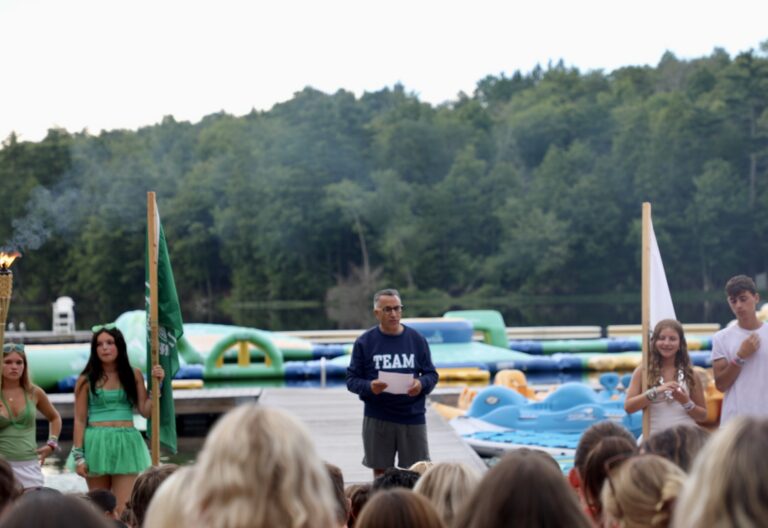
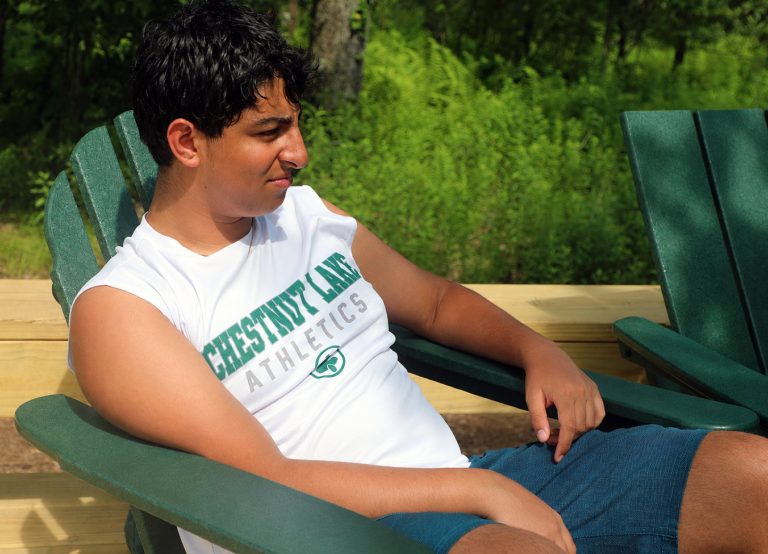
By Aaron Selkow, Owner/Director | These remarks were delivered at the Celebration of Life event on August 29, 2026 in honor of Kesin Dixit, a longtime Chestnut Lake camper and young leader who suddenly and tragically passed away on August 15, 2026 while on a trip with his family to the Netherlands.
There is a wooden puzzle sitting on a shelf in the woodshop at Chestnut Lake Camp. It has been there for three or four years. It isn’t painted. It isn’t polished. There is no name on it. But I know that Kesin made it.
I remember walking into the woodshop one summer and seeing him working on it. He might have been 11 or 12 years old. He was cutting the individual pieces with a scroll saw — or at least attempting to. He was getting some help. He seemed frustrated. I watched for a little while and remember thinking that this might be Kesin’s last visit to the woodshop for some time. He didn’t seem to be having much fun. The project wasn’t going especially well. And then the summer ended.
As we do every year, we cleaned up camp and prepared our buildings so we could continue giving tours to prospective families. In the woodshop, our staff placed some of the campers’ projects on shelves along the wall. Weeks later, I walked into the building with a family and saw the puzzle. It was nearly finished now. Not painted. Not signed. Some cuts were good, letting the pieces slide in and out easily, while others were less successful and got a little stuck. There was no name on it. But I knew.
The following summer, when Kesin came back to camp, I asked him about it. “Why didn’t you take your puzzle home?” He seemed almost puzzled by the question. He told me he had liked working on it. He had liked practicing with the scroll saw. He had liked getting better at using it. And, he pointed out, he still had all his fingers. He didn’t need the puzzle.
I’ve thought about that answer many times over the years, and I’ve thought about it constantly these last two weeks. Because the puzzle is still there. I never asked anyone to move it. It just stayed on the shelf. I’ve walked past it hundreds of times. Sometimes on a tour I’ll pick it up. Sometimes I’ll tell Kesin’s story.
Just a few days ago, during one of our final tours of the summer, I walked into the woodshop and saw it again. I didn’t pick it up that time. I just noticed it sitting there. Complete, but imperfect. Unpretentious. Unsigned. A little thing made by a kid who hadn’t needed anyone to admire it. And somehow, without ever intending to, Kesin had left us something that came to represent so much of what I believe camp is supposed to be about: not perfection, not the finished product, but becoming.
I’ve spent more than three decades working with children at summer camps. That means I’ve had the remarkable privilege of watching thousands of kids grow up. And if you do this long enough, you learn that growing up almost never happens the way adults imagine it does. It happens unevenly. A child can be brave one day and frightened the next, confident in one place and completely unsure of himself somewhere else. There are triumphs nobody notices and struggles that feel enormous when you’re twelve and almost invisible years later.
Sometimes you’re fortunate enough to know a child for long enough that one day you can look back and see just how far he traveled. That’s what I see when I think about Kesin.
When he was younger, there were moments when camp wasn’t easy for him. There were times when other kids were unkind. There were times when I worried about him. There were moments when we needed to step in, protect him a little, and make sure he knew that he belonged. I wanted desperately for Chestnut Lake to be a place where Kesin could find his footing — not a place where he would learn how to become more like everyone else, but a place where he would become more comfortable being Kesin. And he did. Summer by summer. Experience by experience. He found his footing. He found his people. He found his voice.
Ann and I tell Kesin’s story quite often. We spend a lot of time meeting parents who are considering Chestnut Lake for their children. And parents worry, of course. Sometimes they’ll describe a child who’s a little more introverted, maybe a little anxious, maybe a child who hasn’t quite figured out where he or she fits. Sometimes it’s simply a parent looking at us and asking, in one form or another, “Will my kid be okay there?”
Over the years, Ann and I would sometimes tell them about Kesin. Sometimes we used his name. Sometimes we didn’t. We’d tell them about a boy who had needed some help along the way, and then we’d tell them about the person he was becoming. Kesin became one of the stories Ann and I carried with us because his story helped us explain what we believed camp could do: not turn a child into somebody else, but quite the opposite. Give a child enough room, enough support, enough challenge, enough friendship, enough time — and then watch as they discover more of who they already are.
There is another Kesin story that Ann loves. One summer, Kesin and Leela were both at camp, and during one of Kesin’s scheduled calls home, Swapna asked Kesin a very reasonable camp-mom question: “Have you gone waterskiing yet?” Waterskiing is one of those iconic camp things. Parents see the photos. Kids talk about getting up for the first time. It’s one of those experiences that can somehow become a benchmark of a summer. Kesin told her he hadn’t done it yet. So Swapna called Ann. Why hadn’t Kesin waterskied? And Ann did what camp directors do when a parent asks a question like that. She investigated. Had we somehow missed him? Had his group not gotten a turn? Had we failed to give him the opportunity? Eventually, Ann went directly to Kesin.
Kesin explained what had happened. He’d had the opportunity, but his friends were going to play together on the inflatables in the Aqua Park. So he passed on waterskiing and went with them. That was it. He would rather be with his friends.
We enjoy that story because Kesin understood something that the rest of us sometimes take a lifetime to figure out. You don’t have to do the thing everybody else thinks you’re supposed to want. You don’t need to collect every experience. Sometimes the best choice is simply to know where you want to be. Kesin wanted to be with his people. And he had found them.
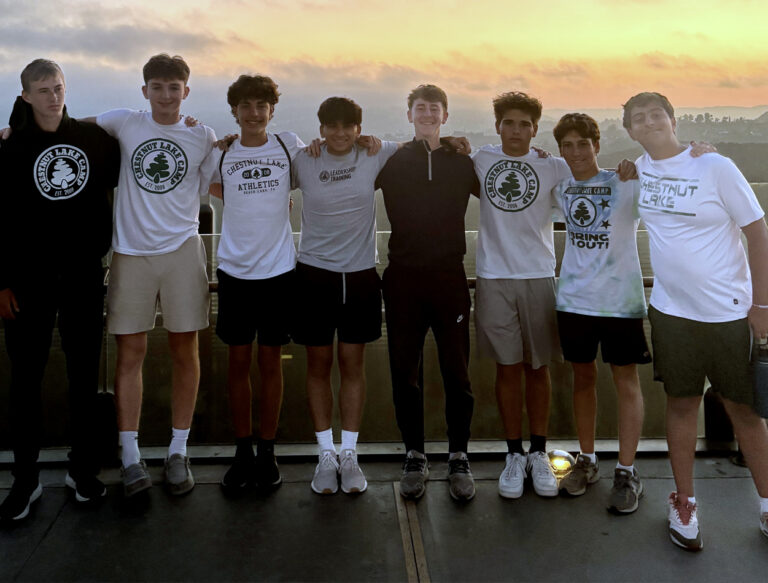
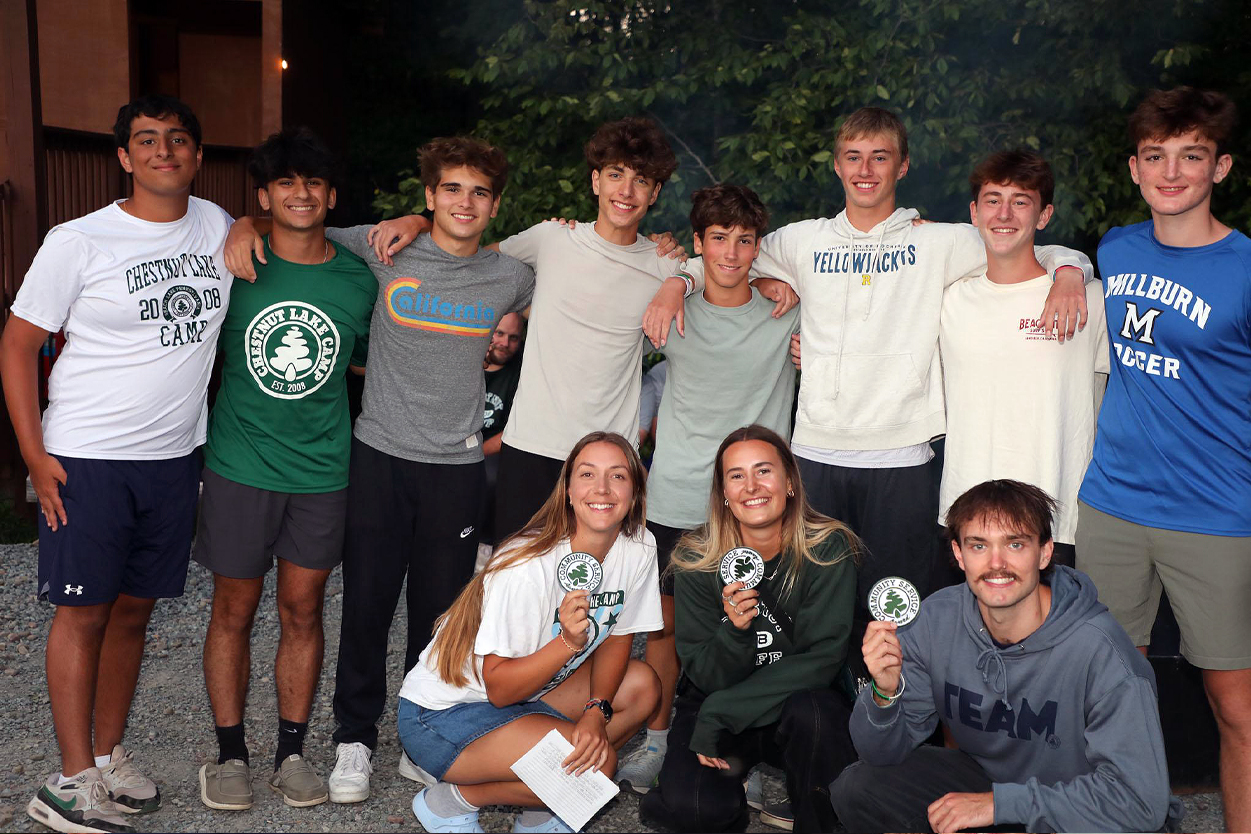
By last summer, something else had changed. Kesin was part of the group with whom we significantly reimagined our Leadership Training, or “LT”, program. LT wasn’t entirely new at Chestnut, but the program we were trying to build was. We wanted it to have more purpose, more responsibility, more substance. We wanted our LTs not simply to be older campers, but to begin understanding what it meant to contribute to a community they had spent years receiving so much from.
Kesin was one of eight boys who embraced that opportunity. And then, in classic Kesin fashion, he and his friends began asking us for more. They challenged us. They told us when they thought the program could be better and showed us that they were capable of even more than we had envisioned for them.
I look back on that now and see something beautiful in it. Because the younger Kesin had sometimes needed us to look out for him. The older Kesin had begun looking out for camp. He cared enough about Chestnut Lake to be dissatisfied when we fell short of what he believed it could be. That’s a profound kind of belonging. At some point, Chestnut stopped being simply the camp Kesin attended. It truly became his camp.
At the end of those four weeks, I sat with Kesin and those seven other young men. I cried. I thanked them for trusting us enough to be Trailblazers, for taking a program we were still figuring out and helping us understand what it could become. I told them that they had made a mark that would last. I remember looking at each of them as I spoke, and I remember looking at Kesin. He knew I was talking to him. Not more than anyone else, but no less. He knew what he had accomplished. He knew he had mattered. I’m so grateful for that now.
There were important moments with Kesin over the years, but when I think of him now, what I miss most are the smallest ones. Seeing him coming down a path. Stopping to talk in the dining hall. Crossing paths before Community Campfire. A smile. A fist bump. And, yes, occasionally, one of Kesin’s truly exceptional hugs.
Just ordinary moments. The little encounters that accumulate over years until, without realizing it, they have become a relationship. You don’t think to preserve those moments while they’re happening. Why would you? You assume there will be another one. And another. And another. Until there isn’t.
Piyush and Swapna, I want you to know something. You sent your children to us. And I know what that means. I’ve spent my professional life asking parents to do something quite extraordinary: entrust us with the people they love most in the world. You trusted us with Kesin and Leela, and because you did, we were given the gift of watching parts of their lives unfold.
With Kesin, we saw some of the hard parts. We saw him struggle. We saw him find his footing. We saw him become more confident. We saw him lead. We saw him challenge us. We saw him become somebody other kids could look toward. And we saw him happy. I hope you know how much that meant to us.
And Leela, I want to say something to you. This summer you came back to Chestnut for your second year of the Varsity program. For the first time, you were at camp without Kesin. I don’t know whether your brother ever said this to you exactly this way, but I know he was proud of you for finding your own way through camp. Kesin wasn’t afraid to love you out loud. A lot of teenage boys might have created a little more distance from a younger sister at camp. Kesin didn’t. He talked about you. He checked on you. He looked out for you. He wanted you to be happy. He wanted camp to be good to you in the ways it had eventually become so good to him.
There’s something about that progression that I find incredibly moving. The boy who once needed people to look out for him grew into a young man who looked out for others — for his friends, for other campers, for his camp, and, always, for his sister. Leela, your brother left something at Chestnut Lake much greater than a wooden puzzle. He left himself there. And some of what he left there, he left for you.
We use a term at camp all the time: growth mindset. I talk about it with kids. I talk about it with staff. I talk about it with our leaders. Try. Struggle. Learn. Get a little better. Don’t be afraid to be unfinished. I’ve spent an enormous part of my career trying to teach that idea.
Kesin, sitting at that scroll saw, understood it without needing the speech. He didn’t need to take the puzzle home. He didn’t need to finish it perfectly. He didn’t need to paint it. He didn’t need to put his name on it. He had worked on something. He had struggled with it. He had gotten better. That was enough.
And there is a cruelty in standing here today and talking about an unfinished puzzle. Because Kesin’s life was unfinished. There is no poetic way around that. He was supposed to have more time. So much more time. There were supposed to be more summers, more adventures, more friendships, more mistakes, more things to learn, more things to challenge, more people to love, more opportunities to become whoever Kesin was going to become.
Piyush and Swapna were supposed to watch it. Leela was supposed to watch it. His family and friends were supposed to watch it. We were supposed to watch it. And I won’t try to make something beautiful out of the fact that we won’t. It is heartbreaking. It is unfair. It is a loss beyond words.
But perhaps that little puzzle can still teach us something. Something Kesin already understood. Unfinished does not mean without value. Unfinished does not mean unsuccessful. And unfinished certainly does not mean without meaning.
The meaning was in the making. In every cut. Every mistake. Every time he tried again. Every friendship. Every person he loved. Every time he made somebody laugh. Every moment he spoke up because someone or something mattered to him. Every time he challenged us. Every time he walked down a path at camp and somebody was simply happy to see him coming. The meaning was in becoming Kesin.
Chestnut Lake is quiet now. Our campers left almost two weeks ago. Then the counselors. Then our leaders. After seven weeks of noise and music and laughter and constant motion, camp is still again. It happens every year. Every year I’m reminded that without its people, a camp is just buildings and fields, a lake and trees. The people are what make it matter. Kesin made it matter.
And when I walk through camp now, I know there will be places where I will find him. In an LT program he helped make better. In the stories his friends will tell. In the people who are different because they knew him. In the memories carried by counselors and staff who watched him grow. In Ann. In our own daughter, Lily. In me.
And in a woodshop, on a shelf, where there is a wooden puzzle with no name on it.
For years, I knew exactly whose it was. Now I realize it has Kesin’s name all over it. I don’t think I’ll ever move it. Kesin told me he didn’t need to take it home. So he left it with us. And now I understand that he left us so much more: his friendship, his questions, his challenges, his joy, his example, a piece of the young man he was, and a glimpse of the man he was becoming.
Kesin left those things with us.
We will remember them. We will learn from them. We will tell his stories.
And we will take very good care of what he left behind.
 Yesterday morning, Ann and I received heartbreaking news from Kesin’s parents, Swapna and Piyush. While their family was traveling together in the Netherlands, Kesin became suddenly and seriously ill. Tragically, he passed away on August 15 at the age of 17. He was far too young. We are heartbroken for Swapna, Piyush, his sister Leela, and everyone who knew and loved him.
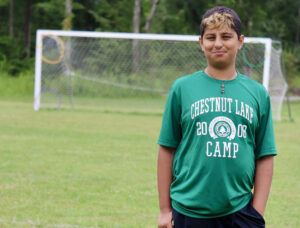 deeply in camp, his name sometimes came up. I wish I had told him that his story mattered to us. Most of all, I wish I had told him that Chestnut Lake was better because he was part of it. Maybe he knew some of that. I hope he did.