

Campfire Tales | Week 5 (7/27/24)
By Aaron Selkow, Owner/Director
When I go to dinner with friends, I meet people at a party, or I strike up a conversation with the person next to me on an airplane, there is an inevitable question that comes up after I’ve told them that I direct a summer camp with my wife, Ann:
“But what do you do the rest of the year?”
Some other time, in another blog (or in the yet-to-written book, “My Life as a Camp Director”), I will take the time to dig deeper into all of the ways that I’ve tried to respond to that question. But suffice to say that it’s always fun to try to explain why I don’t spend September to May in sunny Florida, snowy Colorado, or some other restful place. There is a lot of work to do the rest of the year…but that’s not the point of this entry today. The question that far fewer people ask – and it’s something I’m excited to address now – is slightly different but just as interesting:
“What do you actually do during the summer?”
Let me answer that by sharing just a brief glimpse into my week as the director of Chestnut Lake in the first week of our Second Session.
 Without going into great detail, I spent countless hours this week doing stuff that most of our community, campers, families, and staff will never even see. I sat in a bunch of meetings getting briefed on what was happening around camp, I received/made/replied to lots of phone calls and e-mails to try to support the success of our kids, I spoke to many staff members about how they were doing and tried to coach them to be even more successful, I had quite a few difficult conversations and made some tough decisions having to do with various typical and atypical challenges that come up in an environment like this, and did other usual “camp-director-y” things that we all do in this field. But now let me share what I did this week that makes this one of the best jobs in the world:
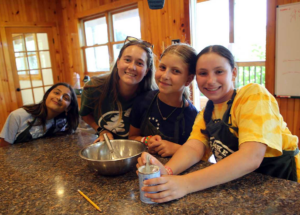
I played some kickball with a group of Niabi girls that was the perfect example of how a camp with so much to offer can also create fun with a rubber ball, four plastic bases, and the enthusiasm of wonderful staff. The girls were spirited and silly in all the ways that I would hope, and my home run was a boost to my former athlete ego. I got to run a Z-Route in flag football during an elective period and absorbed the gentle barbs from the boys. They were so excited to be there, and there was more concern about their touchdown dances than their skills at catching and passing. Making candy sushi with girls at an elective was also a great example of programming being less important than relationships at Chestnut. Yes, they were having so much fun with the execution of good sushi-making techniques. But it was the giggling happening between every other word and the sheer joy they were showing that made it feel meaningful.
I chose to sit with a camper yesterday who was feeling sad, and though I cannot point to any one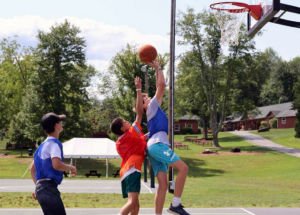 thing I did or said that felt like it was helpful, maybe just the extra attention helped him to look up and expose a tiny smile. That shift must have continued because just a few hours later I watched as he was begrudgingly coaxed out of the pool from the game he was playing with a few friends. Watching those turnaround moments can be an all-day thing for a camp director because our campers are so adaptable and resilient, and even the rough moments can quickly fade away before your eyes. I joined a Varsity table for breakfast a few days before they would be leaving on their big trip (tomorrow) and marveled at the bonds they have made with each other and their staff members, including their negotiation over group assignments while in the Washington, DC area to ensure that they would be able to spend even more time with their counselors. I played some basketball with Sani boys who might not have known that a long time ago I wasn’t so bad at the sport…and now I’m hoping the Advil will finally kick in so that my back stops hurting. I sat down with a mix of older and younger girls in Create It while they were painting on individual canvases and could make out some of the images of the camp that they were trying to represent. It was awesome to see them seated with each other but silently engaged in creativity. And I walked into the Garden with some boys during Free Play to show them the zucchini, tomatoes, peppers, and various herbs that we are hoping with be picked and introduced somehow at Culinary in the coming days. All of these moments reminded me how fortunate we are to have these unique jobs that almost nobody else can understand.
This has been a truly busy and exciting week at camp. I know our campers’ parents and friends and family are home, desperate to know more of what’s happening, I know there cannot be enough pictures, and I know that you’re jealous of your kids as they have so much fun without you being able to experience it along with them. But I can tell you, from first-hand knowledge and experience, they’re having a blast.
So that’s what I do…that’s how I spend my time. Except when I’m doing other stuff entirely!

 , and in most cases, it was never too far from the present. We are sometimes afraid of change at camp, yet we try to welcome new ideas and celebrate innovation. Those are qualities of camp that are so valuable in the real world for us all, but especially for our children.
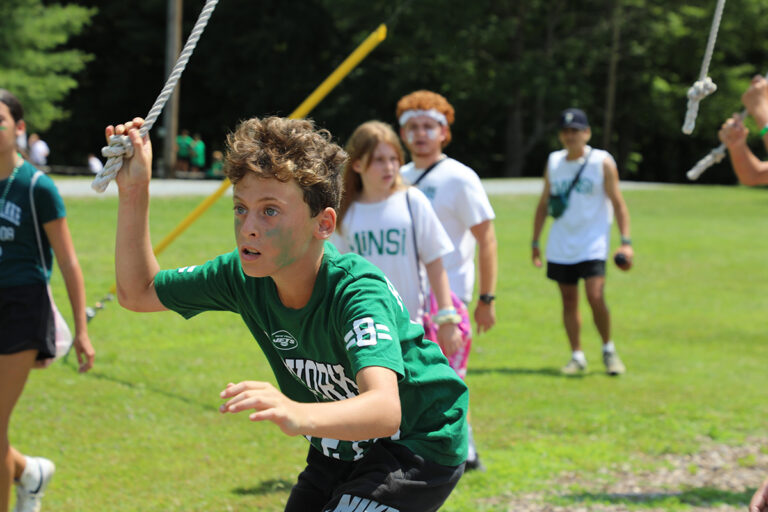
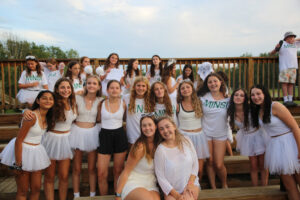 Although the tradition of Color War has come a long way since its creation (purportedly) at Schroon Lake Camp in 1916, including renaming, reframing, demystifying, and deconstructing some of the trappings to make it more effective and acceptable in today’s world, one common and consistent element can teach us a lesson. As camps strive each day to build healthy communities inside of their cabins in the woods, working dutifully to create a coalition and establish peace in these temporary homes, Color War often tests that process by making teams. Whether Green and White, different countries, or themed groups, bunkmates are divided. Friends that might usually choose their programs based solely on what the person who they sleep just a few feet away from is doing, or kids that would break up with someone if it was important to their BFF for any reason, now will spend hours upon days on opposite sides of this camp tradition. The competition can be fierce, even if the activities with the War include carrying an egg on a spoon. There are athletic contests that the entire camp may watch, rope-burning rituals that make for some of the most important moments – and awesome photographs – of the summer, and the writing and presentation of songs that can become part of the camp’s folklore forever. It’s a big deal at many camps, and no matter what camp professionals say and do to suggest that it is not the end-all and be-all of the summer, the dividing of kids and their staff between teams cannot be understated as a tricky variable. At Chestnut, we call this program, “Tribal”.
 Camp leaders are not ones to do things without thought, and while they create environments that have inherent risk to give campers a chance to build resilience and independence, Tribal continues as much because of the challenge of having friends on different sides as it does despite it. They establish rules and structure for the program, of course. There are still shared values that govern the play, strong enough to sustain even when conflict arises. There are people in charge – independent and unbiased observers, referees, and surrogate parents – to shepherd the participants through their battles. There is an explicit agreement that all combatants must adhere to when the War is over: we will congratulate all for their efforts and then return to camp as we left it. There will be sad faces, tears, and lost voices, and the colored face paint may take a few days to fully disappear. But when Tribal is over, the colors fade. The issues that pitted teams against each other are over, we are back to working together for the betterment of the whole community, and the winners and losers of Tribal are just part of the nostalgia of camp with some funny or hard moments that we talk about at camp reunions for generations to come. Remember that fight song from 2009 with that line about the Unami Chiefs? Davey wrote it, and he’s now retired and living in Davie. Remember that Apache Relay from 2013 when Rachel cheated and edged Alex out at the end? Rachel is a prosecutor in the US Attorney’s office now. The fights on the fields of competition don’t linger, even if the tales of them sustain. Tribal creates stories, builds spirit, and proves that people who find themselves on two different sides of something can vie for a trophy without setting aside the decorum and humanity that is at their core.