
Campfire Tales | Bring Camp Home

By Aaron Selkow, Owner/Director

There are certain questions that seem to follow anyone who works at a summer camp: What’s your favorite activity? Do you ever sleep? What do you do the rest of the year? And, of course, “What makes camp so special?”

After more than thirty years of doing this work, you’d think I’d have a polished answer by now. Instead, I usually find myself fumbling through one explanation after another, never quite satisfied that I’ve captured it. I can certainly describe camp. I can tell you about our waterfront, our trips, our electives, our traditions, or the incredible staff who make Chestnut Lake what it is. I can show you photographs or point you toward our highlight videos. But if I’m being honest, I don’t think any of those things really explain camp. Describing camp and explaining camp aren’t the same thing.

I’ve been thinking about that a lot over the last few weeks, partly because we’re approaching the end of First Session and partly because I recently reread some sections of Adam Grant’s Originals. One of the themes that has always resonated with me is the idea that organizations improve when they’re willing to challenge assumptions instead of simply accepting the way things have always been done. Reading it again reminded me how often we ask ourselves those kinds of questions here. Why do we do it this way? Is there a better way? What would happen if we started over instead of tweaking what already exists? Those questions eventually led us to build Campbase.

That probably sounds like a strange turn in a blog about camp, and I promise I’m not about to spend the next thousand words talking about software. Campbase is simply one example of something I’ve become increasingly convinced of over the years. Excellence isn’t usually achieved through one brilliant idea. More often, it’s the result of hundreds of small decisions made by people who refuse to become comfortable with “good enough.”

Most camps purchase activity scheduling software. We almost did. In fact, we spent nearly two years looking at the options. Some of them were very good. They solved real problems, and they would have worked for us. Instead, we decided to teach ourselves something none of us had ever done before. Looking back, that sounds a little ridiculous. We aren’t software developers. We’re camp people. But somewhere along the way, we realized we weren’t really building software. We were trying to build a better camp.

Campbase isn’t important because of what it does. Most families will never see it, and frankly, I hope they don’t. Its value isn’t in the technology itself but in what the technology makes possible. If a better system gives a Division Leader another twenty minutes to spend walking through cabins instead of sorting schedules, that’s meaningful. If counselors can spend less time tracking attendance and more time talking with campers, that’s meaningful. If we become just a little more intentional about how children experience each day, that’s meaningful. The software isn’t the point. The people are.

That sentence probably explains more about how I think than almost anything else I could write. The funny thing is, I don’t think I arrived at that belief because of the camp I direct today. I think I arrived there because of the camp I attended as a kid. By today’s standards, it wasn’t especially impressive.

Our basketballs were so worn that sometimes they barely bounced. The softballs had frayed seams and were slowly unraveling. We swam in a lake that always seemed to have something floating on the surface that nobody could quite identify. There was no inflatable aqua park, no waterskiing, no climbing tower. The docks in the lake (which was more so a pond) were made of metal and became almost too hot to stand on during the middle of the afternoon. Even the canoes felt like they’d been sitting inside an oven. If someone toured that camp today in the state that it was in when I went in the 1970-80s, they might leave with a fairly long list of things they’d want to improve.

I left with my life changed.

Not because of the basketballs. Not because of the lake. Not because of any activity I can actually remember. I honestly couldn’t tell you what I did on an ordinary Tuesday afternoon during the summer of 1983.

I could, however, tell you about my counselor. One Closing Day, when I was twelve years old, he hugged me goodbye. I don’t remember anything profound being said. I don’t remember a speech about friendship or growing up or staying in touch. I just remember crying. Not the kind of tears a twelve-year-old hopes nobody notices. The kind you can’t stop even if you want to. Looking back now, I think it may have been the first time I had ever allowed myself to be that vulnerable with someone outside my own family. I don’t think I understood it then, but I understand it now. That moment became part of me. It quietly shaped the husband, father, camp director, and person I would eventually become. No activity schedule could ever take credit for that. People could.

That’s why I’ve always been a little skeptical whenever camp conversations focus too heavily on facilities or activities. Don’t misunderstand me — I love what we’ve built (and what we’re enthusiastically and quickly building) at Chestnut Lake. I love that our campers have opportunities I never had. I love watching a child go tubing for the first time, return from an unforgettable trip, or discover a passion in one of our specialty programs. Those experiences matter. They create excitement. They create stories. But they aren’t the stories. They’re where the stories happen.

The story is the counselor who notices a camper sitting apart from others. It’s the friend who quietly saves a seat. It’s the conversation on the walk back from the lake that somehow changes the course of a friendship. It’s the cabin that figures out how to live together despite all the ordinary messiness that comes with being eleven or fourteen or sixteen years old. Those moments rarely make the highlight video. They’re also the ones that seem to last the longest.

Which brings me to something I’ve noticed every Closing Day.

Parents almost always ask the same question: “How was camp?” It’s exactly the right question. It’s also an impossible one.

Imagine trying to summarize twenty-eight (or twenty-one, or even fifty) days of your life before you’ve even unzipped your duffel bag. Where would you begin? With the Color Run? The counselors? The argument with your best friend that somehow turned into an even better friendship? The night everyone laughed so hard they couldn’t fall asleep? The homesickness that disappeared so gradually you never noticed the exact moment it was gone? The really tough moments you overcame (with a little help, or without)? There isn’t an answer big enough for that question.

When Ann and I were raising Lily, I asked the same kinds of questions after school, after soccer practice, after just about everything: “How was your day?” Even now, with her in graduate school, I still catch myself asking questions that don’t invite much of an answer. I’ve slowly learned that better questions don’t simply produce longer conversations. They produce more meaningful ones. What surprised you today? What challenged you? Who made you laugh? When did you feel proud of yourself? Those questions don’t just uncover memories. They help children organize them. They help them make sense of experiences that are still unfolding long after the experience itself has ended.

That’s really why I put together the Bring Camp Home guide that accompanies this week’s Campfire Tales email (you can also find it here). Not because I expect anyone to sit down and work through it like homework. Not because I think there are magical questions that unlock every camper’s heart. I simply wanted to give families a few more ways to begin conversations that deserve a little more time than the ride home from the camp bus pick-up usually allows.

A few summers ago, I had an experience that unexpectedly reinforced all of this. Our baggage company abruptly went out of business just before the end of camp. Overnight, we found ourselves responsible for delivering hundreds and hundreds of bags across the Northeast/Mid-Atlantic region. We rented trucks, reorganized schedules, identified staff, mapped routes, and somehow made it happen. I ended up driving a twenty-foot rental truck to Philadelphia with a few staff members, partly because we needed another driver and partly because it gave me an excuse to introduce them to my favorite cheesesteak.

As we finished making our delivery, camp buses started arriving. For one of the very few times in my career, I stood off to the side and watched parents welcoming children home. It was quieter than I expected. There were hugs that lasted a little longer than usual. Smiles that appeared before the bus doors even opened. Parents reaching for duffel bags while simultaneously trying not to let go of their kids. It struck me that nobody seemed particularly interested in hearing how many electives their child had taken or whether they finally landed that trick on waterskis. What mattered first was much simpler. Their child had gone away. They had grown. And now they were home. The stories could wait.

In many ways, I think that’s what camp has always been about. Not creating perfect summers or checking off activities, but giving children experiences that gradually become part of the stories they tell about themselves. Some of those stories begin around a campfire. Some begin in a cabin. Some begin with a counselor’s hug. Many of them won’t be fully understood until years later. That’s why I called this little guide Bring Camp Home. Not because I expect you to recreate camp around your kitchen table. You can’t. And you shouldn’t.

Camp belongs to your children. That’s part of the gift. They had adventures that were theirs, solved problems that were theirs, formed friendships that were theirs. We don’t want to take that away by asking them to relive every moment. But we can help them reflect on it. We can ask questions that invite stories instead of summaries. We can help them notice how they’ve changed without insisting they explain every detail. And if we’re lucky, those conversations won’t end this weekend. They’ll continue over dinner next month, in the car this fall, or years from now when an old camp song or an unexpected memory finds its way back into the conversation.

The older I get, the less I think camp is mostly about camp. I think it’s about everything that comes after it. It’s about the confidence that appears in a classroom in October, the resilience that shows up during a difficult season in high school, the lifelong friendship that began over a card game in a cabin, or the adult who, decades later, still remembers what it felt like to be seen, encouraged, and loved by a counselor.

Twenty-eight days has never felt like enough to me. Certainly not twenty-one. And not even fifty. Maybe it never will. But perhaps the measure of camp was never how much could happen in those days. Perhaps it’s how much of those days children carry with them for the rest of their lives.
Campfire Tales | What Kids Already Know

By Aaron Selkow, Owner/Director

One of the things I’ve found myself doing from time to time this summer is walking into our Main Office’s small conference room, reaching for one of the books on the shelf, and giving myself five or ten minutes to think about something that has nothing to do with the decision or issue sitting in front of me. I should probably be honest, though. I’m not a great reader. At least not in the way real readers would define it (and by “real reader,” I mean Ann Selkow!). I don’t sit down and read a book from cover to cover over the course of a week. I skim. I bounce around. I’ll underline something, dog-ear a page, put the book back on the shelf or nightstand, and come back to it days later because I remembered one idea that I wanted to revisit. I finally unpacked a collection of books I’ve accumulated over the years and put them on the shelves in our office this summer. It only took me six years to officially move in, which feels about right.

What’s been interesting is that the books seem to have started talking to each other. Rutger Bregman’s HumanKind, Lisa Miller’s The Spiritual Child, and Kate Bowler’s Joyful Anyway are very different books written by very different people, yet each of them, in its own way, keeps coming back to the same question: What is it that human beings actually need in order to flourish? Not what entertains us. Not what impresses us. Not even what makes us successful. What do we genuinely need if we’re going to become the people we hope to become?

I’ve found myself thinking about that question while walking around camp this summer. My days, like every camp director’s, are wonderfully unpredictable. One moment, I’m meeting with a Division Leader about a camper who’s finally settling in after a difficult first week. Next, I’m watching a counselor patiently teach a child to waterski for the very first time. Somewhere in between, I’m answering a parent’s email, sitting in on a staff meeting, grabbing lunch with a group of campers, listening to a counselor tell me about a breakthrough conversation she had with a homesick child, or simply wandering through camp with no particular destination because that’s often when I see the things I most need to see. If you asked me to describe my day, I’d probably mention radios, meetings, staffing, phone calls, and a thousand moving parts. But if you asked me what stays with me at the end of the day, it is almost never those things. It’s the little moments that no one plans and no one schedules. They are easy to miss if you’re moving too quickly, but I have come to believe they are where the real story of camp is almost always unfolding.

That question wasn’t on my mind, at least not consciously, when I stopped six campers on a path yesterday. We had been walking together and talking about whatever happened to come up, when I interrupted the conversation with a challenge. I asked each of them to think of the one thing they loved most about camp, but to answer with only a single word. Before anyone spoke, I made them promise to settle on their answer first and not change it after hearing everyone else’s. I wasn’t trying to conduct a survey. I simply wanted six honest answers instead of six children following the crowd.

The answers came one by one. One camper said, “lake.” Another answered, “community.” A third smiled and said, “fun.” And three all landed in essentially the same place, choosing either “friends” or “friendship.” It was over in less than a minute, and we continued walking as though nothing particularly meaningful had happened. I doubt any of those campers gave the conversation another thought.

But I did.

Over the next day, I found myself replaying those six answers in my head, and the more I thought about them, the less different they became. At first glance, they sounded like six separate responses. One child loves the waterfront. Another values community. Three cherished friendships. One simply wants to have fun. But after sitting with those words for a while, I began to wonder whether they were all describing the very same thing from different angles. The camper who answered “lake” wasn’t referring to a body of water. She was talking about swimming to the raft with her friends, laughing through a waterski lesson, sitting on the dock, or jumping around the Aqua Park while waiting for her turn, and discovering that one of her favorite places in the world has become meaningful because of the people who share it with her. The camper who answered “fun” wasn’t describing an activity either. Fun is not a scheduled event between two periods on a daily schedule. It’s an emotion that almost always emerges from shared experiences. Even the child who chose “community” wasn’t talking about an abstract value. She was describing what it feels like to be known, to be welcomed, and to realize that your presence actually matters to the people around you.

The more I reflected on those answers, the more I realized that what struck me wasn’t simply what the girls said. It was what they didn’t say. None of them mentioned culinary, basketball, tennis, or drama. No one said Tribal. No one said the climbing tower, the Flying Squirrel, the Canteen, or even her cabin. Those things all matter. We pour ourselves into making them exceptional because they create the experiences that define a Chestnut Lake summer. Yet when six children were asked to reduce camp to a single word, none of them instinctively reached for an activity. Instead, they reached for a feeling. They reached for relationships. They reached for belonging.

I suspect that’s why those few minutes have stayed with me. As adults, we spend an enormous amount of time talking about camp in terms of programs, facilities, activities, schedules, traditions, and experiences. Parents naturally compare camps that way, and camp directors certainly do. We should. Those things matter. We devote months each year to improving them because they shape the environment where children spend their summers. But perhaps, every once in a while, children gently remind us that we’ve been paying attention to the frame while they have been admiring the painting.

Reading those books this summer has only sharpened that realization for me. Bregman argues that human beings are fundamentally wired for connection and cooperation. Lisa Miller writes about children’s deep need for relationships, nature, and a sense of belonging to something larger than themselves. Kate Bowler reminds her readers that joy is rarely manufactured through perfect planning; more often it surprises us in ordinary moments shared with people we love. None of those authors are writing about Chestnut Lake Camp, yet standing on that path with six campers, it felt as though all three were quietly nodding in agreement.

The truth is that every winter, we spend countless hours trying to make camp better. We refine schedules, improve facilities, develop new programs, strengthen traditions, and recruit extraordinary staff members. We invest heavily in training because we believe deeply that remarkable adults create remarkable childhoods. We spend hours thinking about how to help campers make friends more easily, how to create traditions that bring people together, how to help counselors build stronger cabins, and how to create opportunities for children to discover strengths they didn’t know they possessed. All of that work matters, but this little conversation reminded me that none of those things are really the destination. They are the means by which something much more significant becomes possible. Great activities create opportunities for friendships. Beautiful spaces invite children to gather. Caring counselors create the safety that allows children to take risks, to laugh at themselves, to apologize, to forgive, to encourage one another, and ultimately to grow. Everything we build ultimately exists to serve relationships.

I have no idea whether those six girls would answer my question the same way if I stopped them again tomorrow. Maybe one of them would suddenly decide that pickleball or tennis or rock back or Casino Night or Lip Sync deserved the top spot. Maybe another would surprise me with an answer I never would have expected. But I have a feeling that if I ran into those same campers ten or fifteen years from now and asked them what they remembered most about Chestnut Lake, they probably wouldn’t begin by describing the activity schedule we worked so hard to perfect. I think they’d begin with a person. A counselor who believed in them. A cabinmate who became a lifelong friend. A Division Leader who listened. A group of girls who somehow became a second family. They would remember laughing until they couldn’t breathe, finding confidence they didn’t know they had, and discovering what it feels like to belong to a community that asks you to care as much about everyone else’s experience as your own.

Perhaps that’s why I haven’t been able to stop thinking about six simple words offered by six unsuspecting campers. They weren’t trying to explain childhood, and they certainly weren’t trying to explain camp. They were simply answering a question honestly. Yet in doing so, they reminded me of something that adults sometimes overlook. The places that shape us are rarely remembered because of what they offered us to do. They endure in our memories because of who we became while we were there, because of the people who walked beside us as we became that person, and because, long after the details have faded, we can still remember exactly what it felt like to belong.

Children have a remarkable way of instinctively understanding that. Every now and then, if we’re paying attention, they’re kind enough to remind the rest of us.

Campfire Tales | Practicing Character

By Aaron Selkow, Owner/Director

I’ve been thinking a lot about character this week. Not because it’s suddenly become a topic around camp. Truthfully, it’s always been a topic around camp. It’s one of those things that, if you’re lucky enough to spend your life working with children, you can’t help but think about. After thirty-plus summers, I’ve watched thousands of campers grow up. I’ve seen children become teenagers, teenagers become adults, and adults become parents who now send their own children to camp. Somewhere along the way, I stopped paying attention to anything but the big moments. I started noticing the little ones. In fact, I’ve come to believe that the little moments are usually the ones that matter most.

The game-winning basket is exciting. So is the standing ovation at the end of the Camp Show. Rope Burn at Tribal. Community Campfire. Those are the moments that naturally become memories. They’re wonderful, and I hope every camper has plenty of them. But I don’t think they’re the moments that change children. I think children change in much quieter ways.

They change when they decide to move over on a bench at the Campitheatre so another camper has somewhere to sit. They change when they don’t make it to the top of the climbing wall on their first try but decide to give it another shot anyway. They change when they notice someone who looks lonely and invite them into the GaGa game. They change when they tell the truth after making a mistake, or when they discover that helping another person actually feels better than winning. Those moments happen here every single day. Most of them won’t ever be photographed. They won’t make the highlight video. They probably won’t even be remembered a week later. And yet, I suspect they’re the moments that matter most.

People occasionally ask me how camp builds character. It’s a fair question, although I’m not sure I love the way it’s phrased. The older I get, the less I think character is something anyone really teaches. We can certainly talk about it. Parents do. Teachers do. Coaches do. We do. We can encourage it, celebrate it, and recognize it. But I don’t think children become people of character because an adult gave a particularly inspiring speech. I think they become people of character because they practice.

And that’s one of the things camp does better than almost anywhere else. Parents spend years raising their children. Schools play an enormous role in helping them learn and grow. Camp doesn’t replace either of those things, nor should it. What camp offers is something different. Children spend all day together. They solve problems together. They disappoint one another. They forgive one another. They laugh together, eat together, clean together, lose together, succeed together, and wake up the next morning to do it all over again.

Every single day presents dozens of opportunities to make little choices.

  • Will I include someone?
  • Will I keep trying?
  • Will I encourage a friend who’s struggling?
  • Will I put someone else’s needs ahead of my own?

One choice doesn’t define a child. But thousands of those little choices, repeated over time, begin to shape the kind of person that child is becoming.

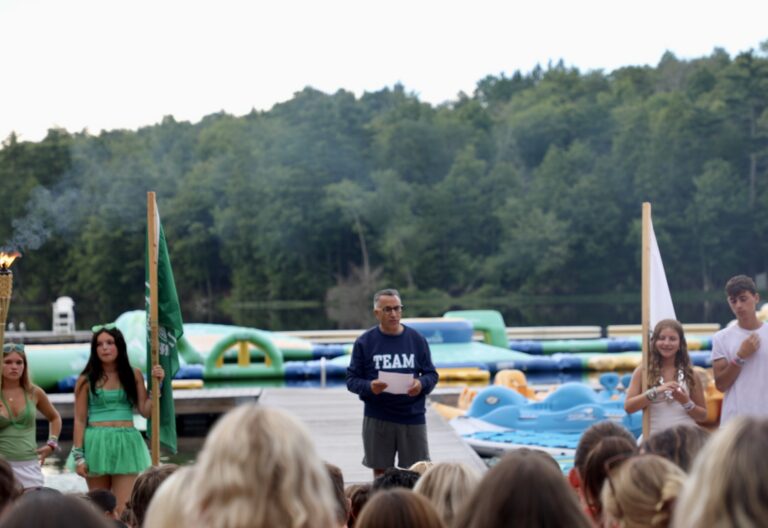
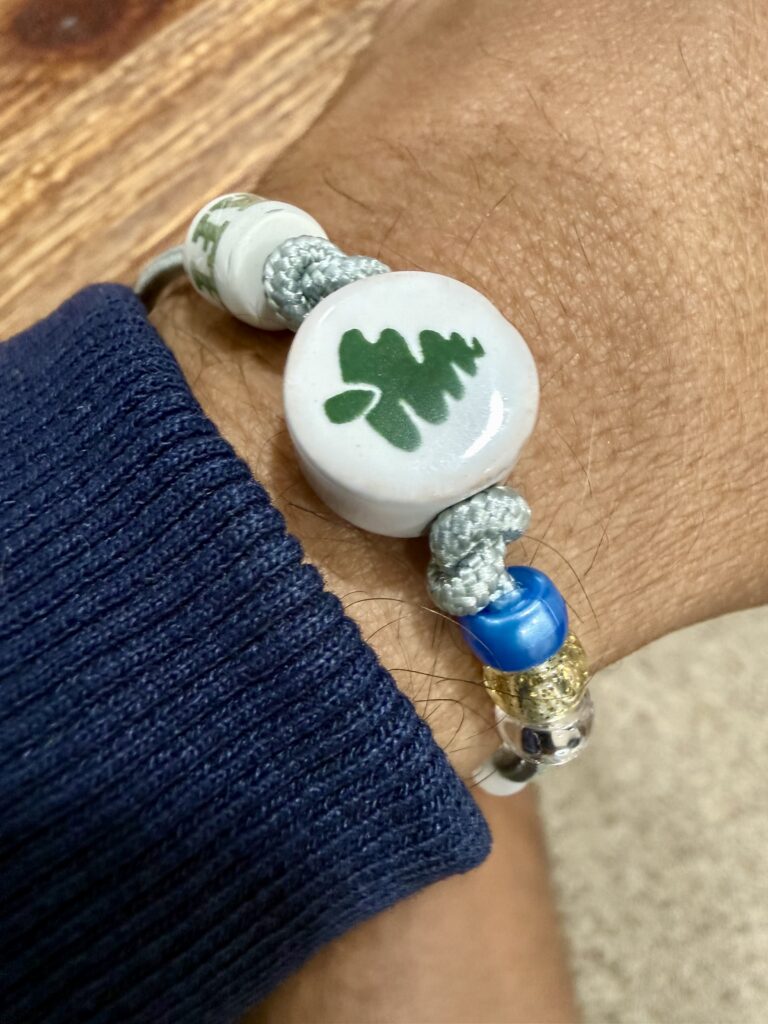
A few nights ago, I stood in our basketball stadium and introduced something new to our campers on behalf of our leaders (and a special “Shout Out” to our wonderful Wellness Team for being such a big part of the overall effort to rebuild our Character Development program this summer!). Every camper received a simple “Wear Your Character” bracelet. It’s nothing fancy. In fact, I hope by the end of the summer it looks like it’s been through camp. I hope it’s scratched, stretched out, and definitely dirty. Because the bracelet itself isn’t what matters. What matters is what it represents.

Throughout the summer, campers will have opportunities to earn three different Character beads (along with other special ones, such as those for their Tribal Team). Not because they’re the fastest runner, the best athlete, or the loudest cheerer. They’ll earn them because someone noticed the way they chose to show up. An Inspiration bead recognizes a camper who lifts someone else up. A Determination bead recognizes someone who keeps going when things become difficult. An Acceptance bead recognizes someone who helps another person feel like they belong. Those three words — Inspiration, Determination, and Acceptance — weren’t chosen by accident. Before camp began, our leaders spent a great deal of time talking about the kind of community we want Chestnut Lake Camp to be. We weren’t looking for a catchy slogan or a new program. We were trying to find simple language for things we’ve always believed mattered. The bracelet simply gives us one more way to notice those moments. And just as we were creating something new, our long-time campers and staff knew that this was also a tribute to the “old” Chestnut where beads were given to campers at times throughout the summer.

I’ve smiled over the last couple of days watching campers wearing their bracelets and being asked about the beads. Perhaps most importantly, they’ve begun to notice these character qualities in one another. That’s really the whole idea. Once children begin looking for inspiration, determination, and acceptance, they start seeing them everywhere. Better yet, they begin looking for opportunities to practice them themselves.

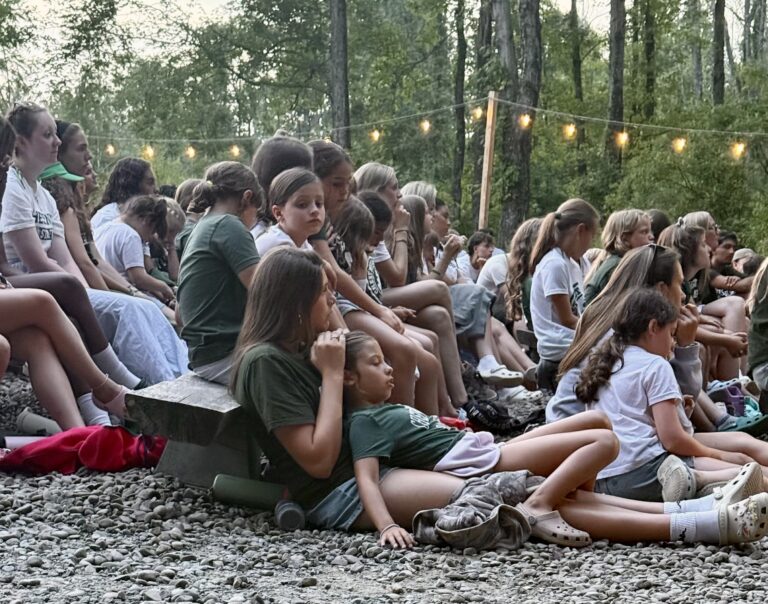
Last night we gathered for Tribal Campfire. Hundreds of campers and staff discovered whether they’re Minsi or Unami. They’ll soon receive their tribal beads and shirts, sing their songs, and officially become part of a tradition spanning many years for Chestnut Lake campers. People often think Tribal is about competition. It isn’t. Competition comes later. First comes belonging. I’ve always believed that’s one of the most important lessons we can offer children. Before we ask them to challenge one another, we make sure they know they’re part of something. Children who feel like they belong are more willing to take healthy risks. They’re more willing to fail. They’re more willing to try again. They’re more willing to cheer for someone else’s success because they aren’t spending all of their energy wondering whether they fit in.

One theme this summer is “It’s Always Summer”. For me, that has never meant trying to make summer last forever. It means believing that the best parts of camp don’t have to end when camp does. They can show up back at school, on a team, around the dinner table, in a college dorm room, or years later in a workplace or a family of their own. One day, those bracelets will wind up in a drawer somewhere. The cord will eventually wear out. A bead may fall off. I doubt many campers will remember exactly when they earned each one. But I hope they remember something more important. I hope they remember what it felt like to encourage another person. I hope they remember what it felt like not to give up. I hope they remember what it felt like to make someone else feel welcome.

Because those aren’t really camp lessons. They’re life lessons. And when I think about what I hope our campers carry home from Chestnut Lake, it isn’t just songs, cheers, traditions, or stories — wonderful as all of those things are. It’s the quiet confidence that comes from practicing, over and over again, becoming the kind of person they want to be. If we can help children do that, even just a little, then we’ve done something that reaches well beyond a summer in the Poconos.

Campfire Tales | Seen

By Aaron Selkow, Owner/Director

Seen

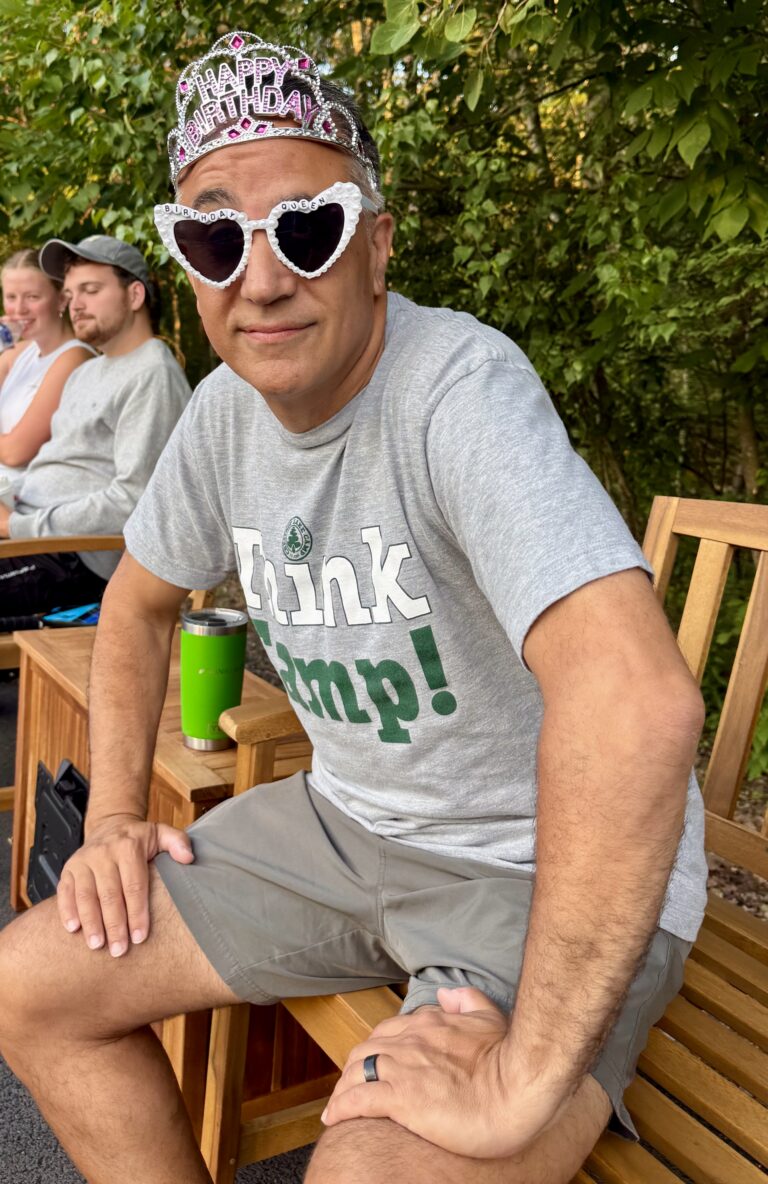
Yesterday was my 56th birthday.

When you’ve spent as much of your life at camp as I have, birthdays begin to feel a little different. By my count, I’ve now celebrated 51 of them at summer camp. It’s hard to imagine another place I’d rather be. There is something wonderfully special about spending your birthday surrounded by children who are laughing, counselors who are pouring themselves into making camp magical, and colleagues who have become part of our extended family. Throughout the day, I wore the same birthday shirt that every camper and staff member wears on their birthday. Hundreds of campers wished me a happy birthday as I walked around camp. There were songs, hugs, pictures, an incredible birthday cake decorated in Philadelphia 76ers colors, and even birthday cake for the entire camp at lunch. By any measure, it was a birthday I’ll never forget.

But none of that is what I’ve been thinking about today.

Last night, during our Friday night Community Campfire, I was invited on stage to receive a Community Service Award. It caught me completely by surprise. Over the years, I’ve quietly received a few nominations from campers, but they’ve always been handed to me privately. This time, because it was my birthday, one of our campers wrote something so thoughtful that our leadership team chose to read it in front of the entire camp. Standing there, I honestly wasn’t thinking very much about myself. Instead, I found myself thinking about what those awards have come to represent at Chestnut Lake.

Community Service Awards have become one of my favorite traditions, not because of the handful of names that are read aloud each Friday night, but because of the hundreds of names that aren’t. Every week, campers and staff members take a few quiet moments to recognize someone who made a difference in their lives. Sometimes it’s a counselor who offers encouragement when it’s needed most. Sometimes it’s a bunkmate who quietly welcomes someone new. Sometimes it’s a camper who demonstrates kindness when nobody else notices, or a staff member who simply makes another person’s day a little brighter. They write those nominations in their own handwriting, explaining why that person mattered to them. Our campus leaders select a handful to be shared publicly each week, but every single nomination is delivered to the person for whom it was written.

Think about that for a moment.

Even if your name is never read in front of the camp, someone still took the time to notice you. They saw something in you that mattered enough to sit down, think about it carefully, and put it into words. They wanted you to know that your kindness, leadership, encouragement, friendship, or compassion made a difference. In a world where so many young people wonder if they are truly seen, I can’t think of many more meaningful gifts than that.

As camp directors, Ann and I spend a great deal of time discussing some of the Chestnut Lake values, such as Character. Leadership. Confidence. We hope those words become more than posters on a wall or beads on a bracelet. We hope they become part of the way our campers think about themselves and about each other. The Community Service Awards have become one of the clearest expressions of those values because they don’t celebrate talent or popularity. They celebrate humanity. They remind us that the most important people in a community are often the ones who quietly make everyone else’s experience better. As I stood on that stage last night, I shared something with the campers that I have continued thinking about ever since.

If I can receive a Community Service Award, then every single person at camp can receive one. I don’t mean that modestly. I mean it sincerely.

The people making the biggest difference in camp aren’t usually the ones standing on stage. They’re the counselor who notices the camper who seems a little quieter than usual. They’re the division leader who spends an extra ten minutes helping a homesick child settle into bed. They’re the friend who scoots over on a bench at the picnic table in the Grove to make room for someone who looks like they need a place to sit. They’re the Varsity camper who takes a younger child under their wing. They’re the maintenance staff member who quietly fixes something before anyone knows it was broken, the nurse who comforts a frightened camper, the specialty counselor who celebrates a child for trying something difficult instead of simply succeeding. Those people make our camp what it is.

One of the things that has struck me most during this first week has been how often I’ve seen those moments unfold. I’ve seen them in our new garden program, where campers eagerly harvested food that, until recently, was just tiny seeds in the ground. I’ve seen them on the pickleball courts, where a group of campers at our first-ever Pickleball Specialty Camp yesterday refused to let the heat diminish their enthusiasm for a sport they are quickly falling in love with. I’ve seen them during evening programs, on athletic fields, in bunks, and simply walking from one activity to the next. The headlines of camp are often found in big events and exciting traditions, but the heart of camp has always lived in the small interactions between people who choose, over and over again, to make someone else’s day better. Perhaps that’s why the Community Service Awards mean so much to me.

They remind us to pay attention. They remind us that kindness is rarely loud. They remind us that leadership is often quiet. Most importantly, they remind us that every child deserves to feel seen.

This year we’ve decided to do something new. In the coming days, if your child received a Community Service nomination this week (whether it was read aloud at the Campfire or handed to them after the program ended), we’ll email it home for you to read. Long after the summer ends, I suspect those handwritten notes will become some of the most meaningful souvenirs they bring home from camp. As for me, I’ll carefully tuck my own nomination away with a handful of others I’ve received over the years. Not because I think I earned special recognition, but because every once in a while it’s nice to be reminded that someone noticed.

The truth is, that’s something all of us need from time to time. Whether we’re fifty-six years old or ten. Whether we’re the camp director or a first-year camper. We all want to know that somebody saw the best in us.