

Remembering Kesin

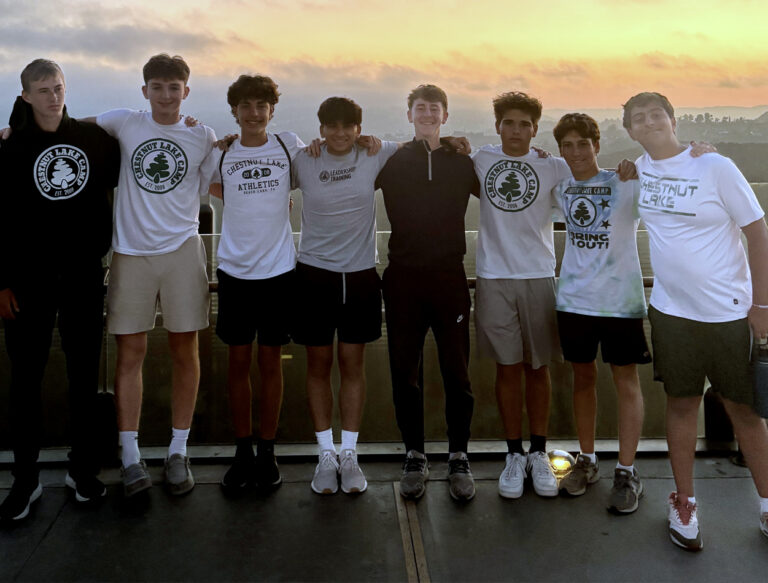
Chestnut Lake’s 2025 Leadership Training (LT) participants, along with their staff. Kesin Dixit stands on the far left.

Some kids become part of a camp’s story. Not because they are the loudest. Not because they win the most awards or score the most points. Sometimes they need a little more time to find their place.

Kesin Dixit was one of those kids.

Yesterday morning, Ann and I received heartbreaking news from Kesin’s parents, Swapna and Piyush. While their family was traveling together in the Netherlands, Kesin became suddenly and seriously ill. Tragically, he passed away on August 15 at the age of 17. He was far too young. We are heartbroken for Swapna, Piyush, his sister Leela, and everyone who knew and loved him.

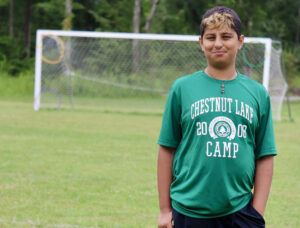
Kesin was supposed to begin at Chestnut Lake in 2020, the summer camp never opened because of COVID. Instead, he and Leela arrived for the first time in 2021.

We remember those early summers well, as Ann and I arrived at a new place during a challenging time, with hundreds of kids anxious to resume their interrupted plans for a great (and much-deserved) summer.

Kesin was so sweet, with an unmistakable smile. Like many first-time campers, things did not always come easily for him. There were times when camp was hard, and I (and others) found myself looking out for him. I wanted to make sure I saw him, said hello, gave him a high five or a fist bump, and let him know that we were paying attention.

And no matter the bumps along the road, Kesin quickly started to find his stride, and he (and Leela) kept coming back. Over time, lots of important things happened. He made friends. He grew more comfortable. He pushed himself. He learned how to navigate relationships and how to be part of a group. Other kids got to know him better and appreciated him for exactly who he was.

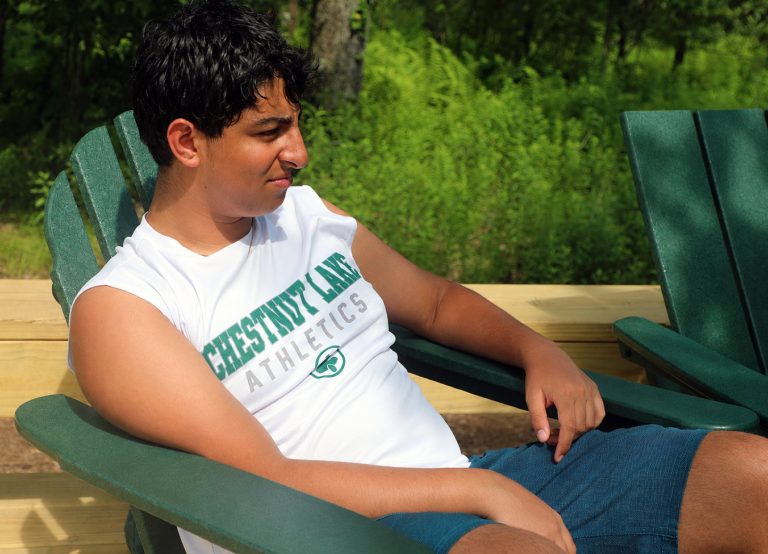
Kesin and his sister, Leela.

What never needed developing was his goodness. Kesin was just so incredibly kind. He cared about people. He cared about fairness. He cared when somebody was not being treated well. He wanted to do the right thing. He was never interested in making somebody else feel smaller so that he could feel bigger. There was not a mean bone in that kid’s body.

And over the years, something else became unmistakably clear.

Kesin loved Chestnut Lake.

He cared about all of it. Tribal. Activities. Traditions. His friends. His counselors. The big moments and the completely ordinary camp days. This place mattered to him.

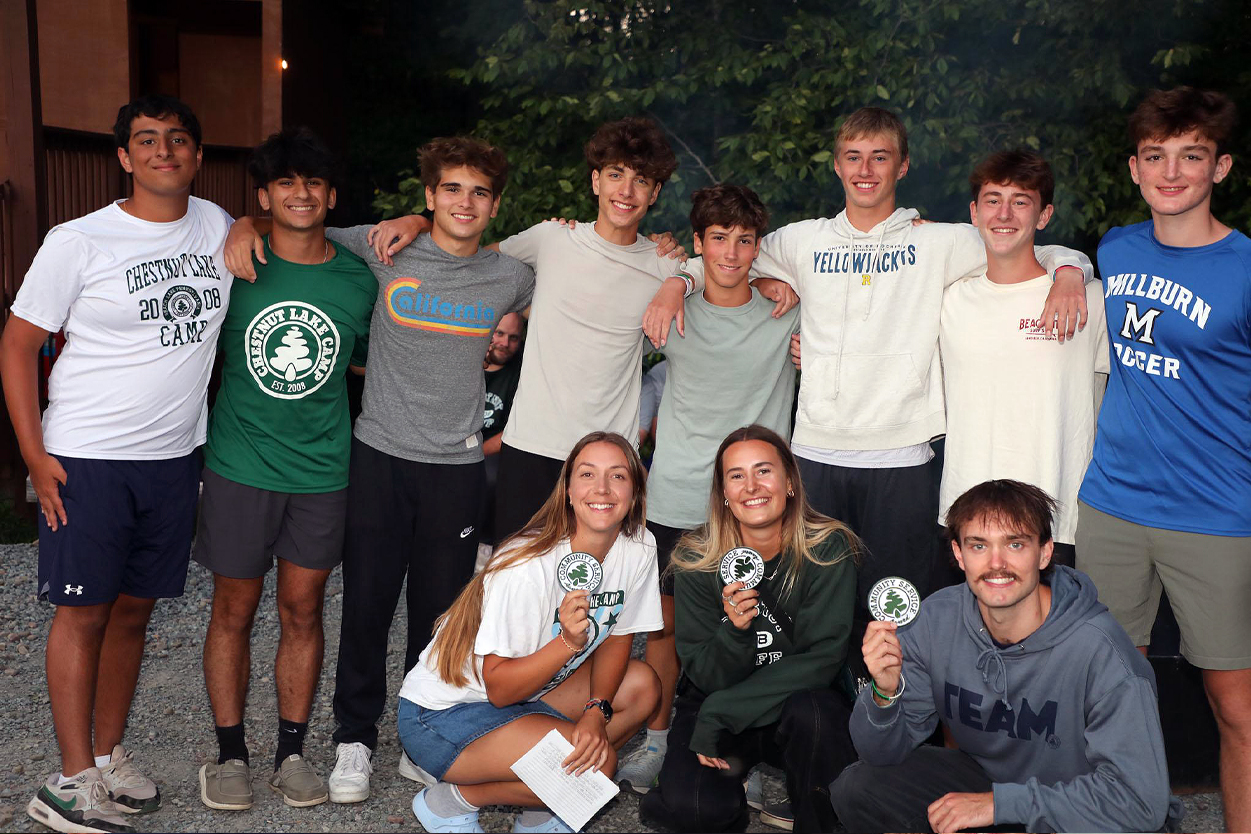
Last summer, Kesin returned as one of eight boys in our Leadership Training (LT) program. We called that first group our Trailblazers because that is exactly what they were. They took a chance on an experience that was still being built and helped us establish what an 11th-grade summer at Chestnut Lake could become. Kesin was all in.

That summer felt like the culmination of so much of his growth. The kid I once felt like I needed to look out for was now standing in front of camp as a leader. He belonged with those seven other boys (and their three dedicated staff), and they belonged with him. They supported one another, pushed one another, laughed together, and became an exceptional group. Ann and I — and many others — were incredibly proud of him.

And the truth is, we kept thinking about Kesin long after last summer ended. When we meet prospective families and try to explain what we believe camp can do for kids, he is one of the children we think about. Sometimes we tell his story. Because Kesin was proof. Proof that not every kid arrives and immediately finds their people. Proof that confidence can take time. Proof that belonging can take time. Proof that kids can struggle, grow, return, try again, and eventually become some of the strongest representatives of the community they once had to find their place in. Sometimes the kid you once thought you needed to look out for becomes someone you look up to. That was Kesin.

And if you want to understand how much Chestnut Lake still meant to him, there is one small story that says almost everything.

About a month ago, as we were moving through our 2026 season’s First Session, we held our annual pre-trip Zoom meetings for families in Varsity-1, Varsity-2, and LT. We reviewed itineraries, logistics, travel details, and answered questions as the trip departures fast approached. Leela was in her Varsity-2 summer, so the Dixit family joined the call.

And there was Kesin.

Right there on camera. He was not coming to camp this summer. He had already finished his camper years and was preparing for his last year in high school, busy with lots of things at home. He did not need to be on that call. But he was. Listening. Smiling. Supporting his sister. Soaking up just a little bit more Chestnut Lake. As anyone who was on that call, or watched the recording later, would know, he was fully there. Somehow, that feels exactly right. Even when he was not here, a part of him still was.

That is what makes this loss so difficult.

There should have been more summers. More reunions. More chances for him to come back and visit. Maybe, someday, a return wearing a staff shirt instead of a camper one. We should have had the chance to see what came next.

Instead, we are left with the summers we had with him and the memories that live inside them. And we are left wishing we had told him more. I wish I had told him once again how proud we were of him. I wish I had told him how often Ann and I talked about him. I wish I had told him that when we tried to explain to people why we believe so deeply in camp, his name sometimes came up. I wish I had told him that his story mattered to us. Most of all, I wish I had told him that Chestnut Lake was better because he was part of it. Maybe he knew some of that. I hope he did.
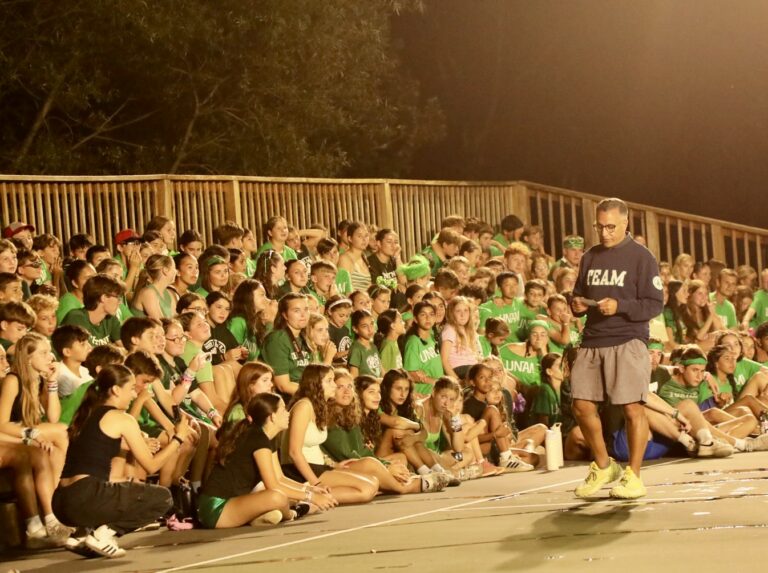
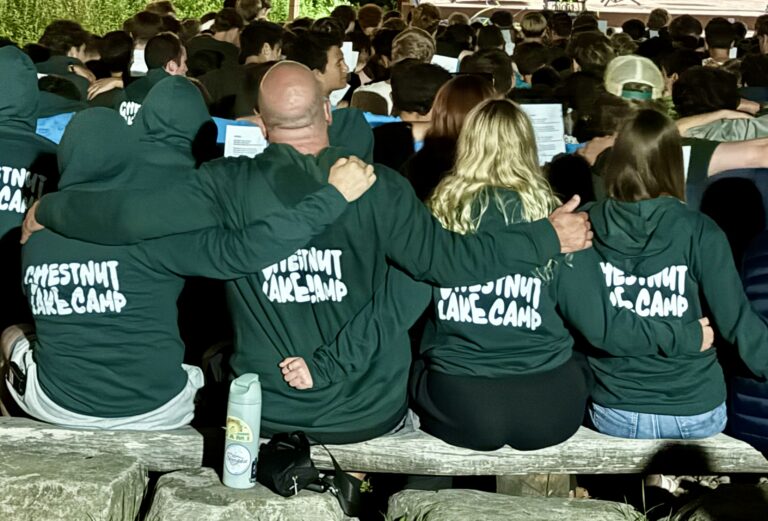
There will be a time to think about how we will remember and honor Kesin at Chestnut Lake. Ann and I have already begun thinking about that, and when the time is right, we will do so together with Swapna, Piyush, and Leela. For now, we simply want to remember him. A really good kid who grew into a wonderful young man. A camper who found his place. A Trailblazer. A leader. A friend. Someone who loved Chestnut Lake very much. And someone who was very deeply loved here in return. We were so lucky to watch him grow.

We only wish we could have watched for so much longer.

— Aaron & Ann

Campfire Tales | Just Camp

By Aaron Selkow, Owner/Director

Yesterday, I gave one of the final prospective family tours of the summer. It always feels a little strange walking families through camp during the last days of the season. While they were imagining what next summer might hold for their children, our campers were already living through final activities and the bittersweet realization that this extraordinary little world they built together is about to come to an end. As we walked around, one of the parents asked me a question I have heard many times over the years:

“What is it about camp?”

It is such a simple question, and after 3+ decades of doing this work and about 50 summers spent in places like this, I am still not sure I have ever answered it particularly well. Maybe that is because camp is not really one thing. It is a place, a feeling, a collection of moments, a community, an idea. It is an experience that somehow becomes much bigger than the sum of its parts. The more I thought about that question later, the more I found myself coming back to something that has been on my mind all summer: for all the ways camp has changed, the most important parts of it really have not changed much at all.

Organized summer camping has been around for well over a century, and the earliest camps were built around ideas that still sound familiar today: children spending meaningful time outdoors, living together, gaining some independence from home, and becoming part of a community distinctly separate from their normal lives. The details were different, obviously, but the basic idea was remarkably similar. When I first went to camp in 1976, the world was very different from the one our campers live in today, but the experience itself would still be recognizable to almost any camper here now.

We played a handful of sports. We spent time in a ceramics room tucked into the basement of a building with no windows. There was a tremendous amount of tetherball. We did not need thirty choices every hour or the newest activity someone had discovered at another camp. We had what we had, somebody organized it, our friends were there, and most of the time we thought it was great. That was camp.

Today, of course, we think constantly about how to make Chestnut Lake better. We work to improve the huge range of activities we already offer, while also feeling the pressure to consider what might be new or next for our campers. We have things I could never have imagined as a child: the Flying Squirrel, giant inflatables, boats pulling campers across the lake, extensive athletics, creative arts programs that continue to grow, and facilities that get better every year. We debate additions and improvements all the time, including whether we need more pickleball courts, which, for the record, we do.

That is part of our responsibility. As Chestnut Lake continues to mature, we are not interested in becoming satisfied simply because we know we are a great camp. We believe deeply in improvement. We know there are moments every summer that are not as good as they should be. We know there are leaders, including us, who can keep getting better at what they do. We know our staff can become more capable, our programs more thoughtful, our facilities more beautiful, and our systems more effective. We are incredibly grateful for how hard people work here, but if we are not pushing ourselves to improve, I am not sure what the point of all that hard work would be.

And yet, there is a real paradox in all of this, because children do not actually need most of those improvements in order to have a spectacular summer. They do not need the expansive Outdoor Adventure programming. They do not need to cook a homemade pizza made with basil from our garden in a special oven. What children need in order to have fun at camp remains surprisingly simple. They need to be together. They need an experience prepared for them with enough energy and thought that it becomes fun. They need people around them who care. They need room to laugh, play, try something, mess something up, and try again. That threshold has always been remarkably low.

I think about that every time I walk into one of our cabins. My lens is probably different from many people’s because I grew up at a camp where I slept on a rusty, metal-framed bed. For several summers, my cabin was literally a tent. One light bulb hung from the center pole. Every morning we rolled up the canvas flaps, and on Fridays we moved all of the beds and cubbies outside so we could mop the floor with an unbelievably strong-smelling Pine-Sol product that I can still almost smell if I think about it long enough.

Now I walk onto the porch of a bunk at Chestnut Lake and see shoes lined up neatly because the campers have learned that this helps keep their space clean. I walk inside, and there is a large open area where kids can sit together, play cards, talk, laugh, and hang out. Their clothes and gear are organized in cubbies. I walk into the bathroom, turn on a shower, and the water gets hot. I am not pretending the hot water lasts forever or that the pressure can’t get stronger, but still, there are moments when I look around and think this place is almost unbelievable.

It is not really imposter syndrome, but there is something about being in such a beautiful and thoughtfully built camp that still feels a little unreal to me. And yet, at the same time, it feels completely familiar. The same excitement is here. The same nervousness on Opening Day is here. The same friendships are formed. The same counselors somehow become incredibly important people in a very short amount of time. The same sense of ownership develops, where campers start referring to bunks, paths, fields, and traditions as if they have belonged to them forever. The surroundings have changed dramatically, but the spirit is still the same.

Maybe the biggest difference is not camp at all. Maybe it is the world outside of camp.

When I was a camper, being away from your parents actually meant being away from your parents. You wrote letters. You waited for mail. If there was a real reason to talk, you waited until the last day when your parents picked you up. Today, I am a parent myself, and like so many parents, I can pick up my phone and see exactly where our daughter is. I can know whether she is in her apartment, at graduate school, or somewhere else entirely. The fact that I can do that is still a little hard for me to understand. The fact that she accepts it as completely normal is even more remarkable.

Parents and children today are connected almost all the time. That is simply the world we live in. It is not their fault, and it is not our fault. We built a world in which constant access is normal, and we raised children inside of it. Many of our older campers will get off the bus and very quickly ask for their phones back. Of course they will. Those devices are how they communicate, organize, entertain themselves, and remain connected to everyone and everything around them.

That makes camp separation feel different than it did when I was growing up, and maybe more significant. For a few weeks, our campers are truly away. They are not checking where their parents are, and their parents are not checking where they are. They are not texting home because something happened at breakfast. They are not asking for advice before they make every small decision. They don’t see what their friends at home are doing and wonder whether they are missing something.

Instead, campers get to live here.

They get to figure out where they need to be next because they know the schedule. They learn to make their beds in the morning. They remember, eventually, to brush their teeth before bed. They decide which foods they want to eat and sometimes try things they would never admit to being interested in at home. They choose activities. They choose friends. They decide which adults they trust and which campers they want to spend time with. They make hundreds of small decisions that would seem almost meaningless if we listed them individually, but taken together, those decisions add up to independence.

One of the things I find especially interesting is that they also learn to trust people they never would have met otherwise. A camper or counselor can become one of the most important people in a child’s summer even though they may share almost nothing in common other than the fact that they happened to arrive at the same place and live together. That is an extraordinary thing.

Think about what actually happens in a cabin. A child goes to sleep every night just a few feet away from someone who does not share the same last name, has no common relatives, may come from a completely different town or state, may have very different interests, and may have been a complete stranger just a few weeks earlier. Sometimes that person becomes a best friend. Sometimes they become the counselor your child talks about all year. Sometimes they become someone your child cares about very deeply.

And sometimes they do not. I think that part matters too.

We spend a lot of time talking about camp as a place where children find their best friends, and that is absolutely one of the great gifts of this experience. But camp is also a place where a child may spend three, four, or seven weeks living with someone they do not particularly like. They may sleep a few feet away from that person, walk to activities with them, eat meals beside them, share a bathroom, and spend much of the day moving in and out of the same spaces together. At home, if a child really does not like someone on a soccer team, an after-school activity, or even in a social group, there are often ways to make a change. I understand why. We love our kids and want their days to be filled with happiness and joy.

At camp, that is not always how it works, and I actually think that is one of the great strengths of the experience.

A camper does not have to become best friends with everyone in the bunk. They do not even have to particularly like everyone. But they do have to learn how to live with them. They have to figure out how to coexist, manage frustration, compromise, give someone space, speak up, repair things when they go wrong, and get through a day even when someone gets on their nerves.

They are not doing this alone. They are doing it in an environment with values, with counselors who are paying attention, with leaders who are thinking about them, and with adults whose job is to notice when something is becoming too hard. We do not always get that balance perfectly right. There are days when being around people you struggle with feels like too much. But when campers also have people they trust, people they laugh with, people who put an arm around them when they are sad, people who understand the inside jokes, and people they can tell things to that they may not even tell people at home, then something incredibly healthy can happen. They discover they can be okay even when every relationship around them isn’t perfect.

That, too, is camp.

As this summer comes to a close, I keep thinking about how much energy we put into improving the experience while also trying very hard not to lose what makes it work in the first place. We feel the expectations. We hear from parents. We know families are looking closely at camps and asking whether this could be the right place for their child. We gave more tours this summer than ever before, and hundreds of children and parents walked around Chestnut Lake trying to imagine themselves here. That creates pressure, and some of that pressure is healthy. It pushes us to be better. It makes us examine what we do. It reminds us that no matter how great a summer feels, there is always something we can learn from and something we can improve.

But despite all that effort, all the planning, all the new ideas, and all the expectations, at the end of the day we are still summer camp.

We are trying to give kids the chance to be seen and heard. We are trying to give them a place where they can feel good about themselves and feel whole. We are trying to create a safe environment where they can connect deeply to other people, try things they might not try elsewhere, fall down without feeling ashamed, solve problems, become more independent, and discover that they are capable of handling more than they thought.

That is what camp was asking children to do more than a century ago. It is what camp asked of me in 1976. And it is still what camp is asking of your children now. The activities will keep changing. The facilities will keep getting better. The expectations will keep rising. We will keep pushing ourselves, because your children deserve that from us. But I hope we never confuse improvement with reinvention.

The most important thing we can do is protect the part of camp that never needed fixing.

Kids being away from home for a while. Kids living together. Kids connecting to a world outside of school, home, and a device. Kids being given enough freedom within a safe environment to figure some things out. Kids finding people they love, learning to live with some people they do not, and discovering that both experiences can teach them something. Camp can inform us. It can prepare us. It can help us get over things. It can teach resilience and grit without announcing that a lesson is underway. It can make us laugh, make us feel good, make us feel known, and occasionally speak to some part of us that is hard to reach anywhere else.

It is just camp. It has always been just camp.

And after all these years doing this work, I still love it more than I can explain.

Campfire Tales | Doing the Math

By Aaron Selkow, Owner/Director

For the past few weeks, I’ve been lying to children.

I suppose that sounds worse than it actually is. Around this point in every session, the questions become impossible to avoid. They come at breakfast, while I’m walking past a table, standing outside of Pearl’s Place at night while kids are waiting for their fresh baked cookies, as I strolled past some kids on the bridge heading back from the lake, or yesterday when I was with a propsetive family looking at camp and I couldn’t avoid the inquiry from two campers who were playing air hockey in the Canteen. A camper will fall into step beside me, look up with complete sincerity, and ask the same question that hundreds of campers before them have asked over the years.

“So…when’s Tribal?” I always give the same answer. “I have absolutely no idea.” It’s a terrible lie.

Not because I’m bad at telling it — although I’m sure my face gives me away more often than I want to admit — but because nobody actually believes me. Our campers are much too smart for that. They know Tribal isn’t something that magically appears because a few program team leaders wake up one morning with an idea. They know we’ve been planning it for months. The truth is, we’ve been planning it for almost a year. Before last summer was even over, we were talking about what we might do differently next time. There have been meetings, calendars, supply lists, revisions, and clandestine gatherings to discuss (again) what makes a great “Chief” and who might be selected for that role this session.

By now, there may not be anything I know with greater certainty than exactly when Tribal is going to begin. The campers know that. I know they know that. They know I know they know that. And yet, every year, we all happily continue the charade.

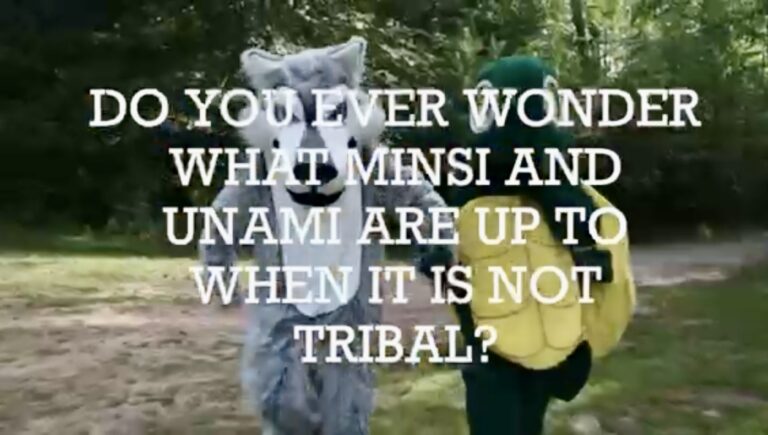
Last night’s Community Campfire reminded me why. Before the Campfire closed, our Communications Team premiered another one of their weekly highlight videos. If you’ve been watching them this summer, I hope you’ve noticed what I have. Somewhere along the way, this group stopped simply documenting camp and started telling its story. Those aren’t the same thing. Anyone can point a camera at a soccer game or at some kids in Culinary. Storytelling is different. It’s deciding that the conversation on the walk back from Outdoor Adventure matters just as much as the Ziplining itself. It’s lingering on the counselor who quietly celebrates a camper’s success before the camper even realizes what they’ve accomplished. It’s recognizing that the moments we’ll remember twenty years from now are rarely the ones we thought were the biggest while they were happening. It’s giving a voice to a child, whether they are a seasoned Chestnut Laker who can explain all of the rituals and traditions with ease or a first-timer who has already grabbed a hold of camp and is not planning on letting go anytime soon.

I know what most parents will do when they watch the video. You’ll look for your own child. Of course you will. I’d do exactly the same thing. I hope, though, that after you’ve searched for them, you’ll watch it a second time. The second viewing is different. You stop looking for your camper and start seeing camp. You notice children who have become more comfortable in their own skin than they were two weeks ago. You notice friendships that now seem effortless, forgetting that they began with two strangers trying to figure each other out on Opening Day. You notice counselors who have stopped performing the role and simply become themselves. You begin to see that what happens here each summer isn’t really a collection of activities. It’s a community taking shape.

The version our campers saw last night ended with a wonderful little surprise that won’t appear in the version our families will see. That’s exactly as it should be. Camp deserves to have a few moments that belong only to the people who were there when they happened. That little surprise, however, made me think about something I’ve been wondering for years.

Why do we keep pretending? After all, by now everyone is doing the math.

There are only so many days left in the session. Tribal isn’t going to begin after everyone has packed their trunks. It isn’t going to interrupt Closing Campfire. Every cabin has narrowed the possibilities to just a handful of mornings. Some campers have elaborate theories supported by evidence that would make a detective proud. Others are convinced they’ve overheard secret conversations or noticed suspicious deliveries. Every golf cart driving somewhere unusual is apparently carrying clues. Every cardboard box is part of the mystery. Every counselor becomes an unwilling suspect. It’s wonderful.

And it’s wonderfully unnecessary. Because nobody is actually trying to solve the mystery. I’ve come to believe that what everyone is really trying to preserve is the anticipation. As adults, we don’t leave much room for anticipation anymore. We track packages on our phones. We check flight statuses before leaving for the airport. We read reviews before seeing movies and spoilers before finishing books. We have become remarkably efficient at eliminating uncertainty from our lives. Children haven’t. Or perhaps camp simply gives them permission not to.

C.S. Lewis wrote that, “The sweetest thing in all my life has been the longing…” He was writing about something far deeper than summer camp, but I’ve always loved the idea that anticipation is not merely the time before joy. Sometimes anticipation is part of the joy itself. I think that’s what we’re protecting. Not the date. Not the surprise. The feeling.

Because once Tribal breaks, something extraordinary begins. Songs start to be written. Cheers echo across camp. Friendships are tested and strengthened. Campers discover reserves of spirit, creativity, resilience, and heart they didn’t know they possessed. It is one of the defining experiences of a Chestnut summer.

But something else quietly disappears. The wondering. There will never again be another lunch this summer where campers speculate about whether “today’s the day.” There won’t be whispered conversations after we join in the Alma Mater trying to decode clues that probably don’t exist. There won’t be another Division Leader trying unsuccessfully to answer a direct question with a straight face. That season of camp ends the moment Tribal begins. Perhaps that’s why I’ve never minded being part of the charade.

As a rule, I don’t like lying to children. Fortunately, that’s not really what’s happening here. We’re all participating in the same story. The campers know there is a secret. We know they know. They know we know they know. And everyone agrees, without ever saying it out loud, that the story is better if we don’t rush to the next chapter. Frederick Buechner once wrote that, “Here is the world. Beautiful and terrible things will happen. Don’t be afraid.” I’ve always thought camp understood that long before I ever read those words. The beautiful things are sweeter when we have a chance to look forward to them.

So watch this week’s highlight video. Try to find your camper. Then watch it again and notice everything happening around them. It’s one of my favorite snapshots of this summer, and I’m grateful to our Communications Team for preserving it.

As for Tribal? Well…

I still have absolutely no idea when it’s going to happen. At least that’s what I’ll keep telling the campers for just a little while longer.

Campfire Tales | Forever Camps

By Aaron Selkow, Owner/Director

Over the past several weeks, I have spoken with parents who are trying to solve a problem they never expected to have. Their children are still at camp. They are living with friends, playing games, singing songs, competing in traditions, and falling asleep each night in a place they believe will be waiting for them next summer. Meanwhile, their parents are at home making phone calls, scheduling tours, joining Zoom meetings, comparing programs, and trying to figure out where their children might go next. Some of these families have children who have been together for years. I have spoken with parents who are hoping to keep an entire group of fourteen campers together in one cabin at a new camp.

I understand why. These are not simply fourteen children on a list. They are friendships, shared histories, inside jokes, traditions, loyalties, and years of memories. When a camp changes or closes, parents naturally want to preserve as much of that world as they can.

At Chestnut Lake, we would not ordinarily keep fourteen children together in the same cabin, even if they had all been with us for years. We certainly would not promise to take fourteen new campers from somewhere else and place them together as one intact group. That is not because we do not care about their relationships. It is because part of the work of camp is helping children become part of something larger. We want them to hold onto the friendships they already have while also meeting new people, stretching themselves, and finding their place within a broader community.

Still, I understand the request. I understand the parent who is trying to save something for a child who does not even know yet that it may be lost.

Many of the families reaching out to us are thoughtful, kind, and asking excellent questions. Some of them actually looked at Chestnut Lake several years ago before choosing another camp. They made a good decision at the time. Their children found a place they loved. The fact that they are calling us now does not mean they chose incorrectly. It means circumstances changed. These conversations have reinforced something I have believed for a long time.

There is probably not only one great camp for every child. There may be two or three. There may be many. Parents often feel enormous pressure to identify the one perfect place. They tour camps, study websites, call references and talk to referral agents, compare facilities, ask about programs, and wonder whether a single decision will determine everything that follows. But that is not really how camp works. You do not have to find the only great camp for your child. You have to find one of the great camps. Once your child is in a good place, run by good people, with thoughtful staff and a healthy culture, camp begins to do most of the work. Your child meets other children. They try things they would not try at home. They become more independent. They laugh. They struggle. They recover. They find people who know them in a new way.

Of course, I believe Chestnut Lake is the greatest camp on earth. At the very least, that is what we aspire to be. We want to be exceptional. We want to be distinctive. We want families to feel there is something here that cannot be duplicated anywhere else. But I am also objective enough to know that there cannot be only one place where a child can thrive. There is not only one great college. There is not only one meaningful career or one company where a person can succeed. Perhaps there is not even only one possible soulmate in the world.

What matters is finding the place, the work, or the person that becomes yours. That is what happens with camp. A child arrives at one of many places that could have been wonderful, and over time it becomes the only place that matters to them. That is why this moment is so difficult.

The children who may need a new camp next summer are not arriving as blank slates. They are arriving with expectations, memories, loyalties, and grief. They may walk into a beautiful camp filled with kind people and immediately compare everything to what they left behind. The dining hall will sound different. The songs will be unfamiliar. The traditions may feel strange. The cabins will not smell the same.

Could the new camp become just as meaningful? Of course. It could even become better. But it will be different. And for children, as for adults, different does not always feel exciting. Often, different simply feels wrong. Most of us do not love change, especially when we did not choose it. It takes maturity, perspective, and trust to imagine that something unfamiliar might eventually become beloved. That is part of what these families are facing.

At the same time, I have been having another kind of conversation. I have spoken with our current parents on Visiting Day. I spoke with families who brought their children for the beginning of Second Session, or parents who have emailed or called us. I spoke with parents who picked up their children from Discovery Camp yesterday. Their concern is different. They want to know how we are going to make sure Chestnut Lake does not change. They have heard about camps closing and families searching for new places. They see the calls, tours, and sudden interest. Some worry that an influx of new families could overwhelm the camp they love. They are concerned that the culture could change, that cabins could become crowded, or that people arriving from somewhere else could somehow take over. I understand that concern, too.

Families do not only want access to a place. They want to protect what made the place special in the first place. This was not a concern I remember from my own years as a camper. It was not even something I thought much about while running camps in the 1990s or the early 2000s. We are living in a different era now. Longstanding camps are facing uncertainty. Families can receive news instantly. Rumors move quickly. Enrollment decisions happen earlier. Parents feel pressure to protect a place before they fully understand whether it is at risk. There is something unsettling about all of it.

Ann and I feel the responsibility of this moment deeply. We care about the families who are searching for a new home. We do not want to turn away wonderful people whose children might thrive here. But we are even more committed to the families who already call Chestnut Lake home. Growth cannot come at the expense of identity. New families cannot be welcomed in a way that crowds out current families or changes the essential character of the camp. We have to be thoughtful about who joins us, how many campers we enroll, how children are placed, and how we preserve the culture that already exists. A camp is not strengthened simply by becoming larger. It is strengthened by becoming more fully itself.

That means staying true to our values. It means protecting the relationships, traditions, expectations, and sense of community that make Chestnut Lake what it is. It means remembering that every new family is not joining an empty institution. They are entering a living community with a history, a personality, and people who already love it deeply. The best outcome is not for a new group to recreate its old camp here. The best outcome is for those children to hold onto the friendships and memories they already have while gradually becoming part of something new. That process will take patience. It will require current families to remain open and generous. It will require new families to understand that they are not replacing one camp with an exact copy of another. And it will require us to lead carefully, honestly, and with a clear understanding of what must never be lost.

Camps are supposed to be forever places. They are supposed to endure across generations. They are supposed to be the places where a child returns year after year until one day that child becomes a parent and tells stories about the lake, the cabin, the counselor, and the summer that changed everything. But forever places do not remain meaningful by refusing to change at all. They remain meaningful by knowing what can change and what cannot. Facilities will improve. Programs will evolve. New families will arrive. Children will grow up. Leadership will eventually pass from one generation to another. But the soul of the place must remain recognizable. That is our commitment.

We will welcome new people with warmth. We will protect the families who are already here. We will grow carefully. And we will continue trying every day to make Chestnut Lake not only a place children love now, but a place they can trust will still feel like home when they return. As close to forever as possible.