

Campfire Tales | Camp is a Gift
By Aaron Selkow, Owner/Director
For the first time this summer, nearly our entire staff community is together. Over the next week, these remarkable young people will participate in Staff Week as they prepare for the arrival of our campers. While campers and their parents are never physically present for moments like this, I have always believed that families should have a window into what happens here and understand the values, expectations, and purpose that guide our community. This evening, I spoke to our staff in the Campitheatre. Rather than summarize those remarks, I thought I would simply share them. What follows is the message I delivered.
Tonight feels different.
Not because camp starts tomorrow. It doesn’t. Not because everything is ready. It isn’t. And not because every member of our staff community is here yet. A few people are still finishing responsibilities at home and will join us in the days ahead. Tonight feels different because, for the first time this summer, we are almost all together.
Look around for a moment. The people sitting around you arrived at different times and for different reasons. Some of you got here just a few hours ago. Some have been here for days. Some have been here for weeks. A handful have been here since May. And while you may have arrived at different times, tonight is the first night we start to feel like one community. Before talking about what’s ahead, I think it’s important to recognize what it took to get us here. Our specialty counselors have already spent days preparing activity areas, training, planning programs, and learning how to lead their spaces. They are counselors first and foremost, but they are also helping create the experiences that will make this summer unforgettable.
Before them came many of our support staff — the people who help keep us healthy, the people who keep us safe, the people who maintain this beautiful property, the people who move equipment, transport people, solve problems, prepare meals, clean spaces, and do countless things that most campers will never even notice. And that’s exactly why their work is so important. Because when they are doing their jobs well, camp simply works. Some of those staff members have already been here for weeks, and I don’t think it’s possible to overstate how much they have accomplished. The food has been incredible. The spaces are coming together. The details are being handled. The place is starting to feel alive again.
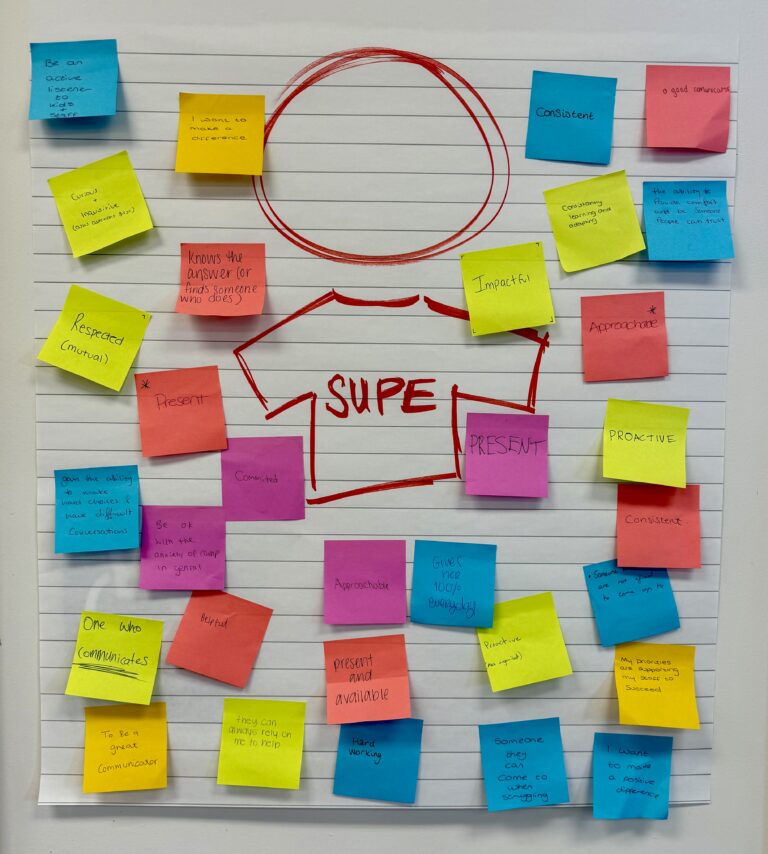
And before them came our SUPES Team. For weeks now, they have been preparing to lead this community. Some are experienced educators. Some are coaches. Some work with children professionally. Some are still finding their path. But every one of them has chosen to be here because they believe in what this place can be. And that’s one of the things I want to talk about tonight: choice.
Because every person sitting here made one. You chose to be here. You could have spent your summer somewhere else. You could have taken a different job. You could have stayed closer to home. You could have chosen something easier. Instead, you chose this. And I don’t take that lightly.
When I look around this Campitheatre, I see people who will make a difference in the lives of others. Some of you will become teachers. Some of you will become coaches. Some of you will become parents. Some of you will work with children. Some of you will go into professions that have nothing to do with any of those things. But I have a feeling that many of you will spend your lives helping other people in one way or another. That’s one of the things that brought you here in the first place.
And if I’m being honest, when I was your age, I would not have necessarily seen any of that when I looked at myself. I certainly didn’t see a future camp director. I wasn’t studying education. I wasn’t preparing for a career working with children. I wasn’t building some master plan that would eventually bring me here. Truthfully, I was mostly interested in sports. School was something I did. Athletics were what mattered. And camp? Camp was just where I kept showing up.
I started as a camper when I was five years old. I turned six during my first summer. Then I just never really left. Not because I had some grand vision. Not because I knew what camp would eventually mean to me. Mostly because I didn’t know anything else. Many of you are actually more thoughtful about this than I was. You applied for this. You interviewed for this. Some of you traveled halfway around the world to be here. Some of you chose Chestnut Lake because someone you trust told you this place was special. I love that. I respect that. And I also know that, in some ways, it means you are starting with more intention than I did.
Over time, I got better at camp. I became a decent counselor. I learned how to run programs. I figured out some things. But one of the most important summers of my life wasn’t spent teaching basketball or running activities. It was spent working in the camp kitchen. And looking back, that summer changed everything. Because when you’re responsible for taking care of people, you learn humility pretty quickly. You learn that communities don’t function because of one person. You learn that every job matters. You learn that taking care of other people is hard work, meaningful work, sometimes thankless work, and incredibly important work.
Without that experience, I’m not sure I’d be standing here tonight. I don’t know that I would have understood what it really means to lead a camp, because it’s not just about standing in front of people. It’s about noticing what has to be done and being willing to do it. It’s about caring when no one is clapping. It’s about understanding that the smallest details can make another person feel seen, safe, and cared for. Because of that, I think I understand at least a little bit of what some of you may be feeling. Maybe you’re excited. Maybe you’re nervous. Maybe you’re wondering whether you’re ready. Maybe you’re sitting here thinking, “What exactly have I signed up for?”
At some point during the next few weeks, almost every person sitting here is going to have a moment when they think, “I have no idea what I’m doing.” And when that moment comes, I want you to know something: That’s normal. It’s supposed to happen. None of us started with all the answers. Not me. Not the people leading this camp. Not the people sitting beside you. The goal is not perfection. The goal is growth. The goal is effort. The goal is to show up every day and try to become a little bit better than you were the day before. That’s what we’re asking of you. We’re asking you to care. We’re asking you to try. We’re asking you to put children first. We’re asking you to live the values of this community. Not because we expect you to be perfect, but because we believe you are capable of being extraordinary.
And yes, you are going to make mistakes. I hope you do. Because mistakes usually mean you are trying. Mistakes usually mean you are stretching yourself. Mistakes usually mean you are putting yourself in a position to learn. We will help you through mistakes. We will teach through mistakes. We will grow through mistakes. What we will not accept is indifference. What we will not accept is choosing not to care. Because these children deserve adults who care deeply.
Now there’s something else I want you to understand about this place. Many of you came here because someone recommended Chestnut Lake Camp. Somebody told you this was a special place. Somebody told you this was where you should spend your summer. Or maybe the greatest staff recruiter in history, Sam Roberts, looked into your eyes — which felt like he was seeing clear into your heart — and made you feel like you needed to come to Chestnut to fulfill your destiny. When people hear that about a place — whether from friends or from members of our leadership—they often assume it has been that way forever because it sounds ideal. They assume, because of that, that it is finished. They assume it is complete. They assume somebody else has already built all of it and that coming here will mean jumping into a place that is fully formed.
But that’s not true. Some of you may not even realize that our first summer wasn’t until 2008. When people talk about Chestnut Lake Camp today, they often talk about it like it’s always been here. Like it’s been around forever. But it hasn’t. Nineteen years ago, there wasn’t much here. There were ideas. There were dreams. There was hard work. There were people willing to believe that something special could exist. Every summer since then, another group of people has added something — a tradition, a program, a friendship, a culture, a standard, a memory, a story. Some stayed for one summer. Some stayed for many. But every one of them left fingerprints behind.
And tonight, you become part of that story. You didn’t come here to observe it. You came here to write part of it. Chestnut Lake Camp is not finished. It is still growing. It is still becoming. And now you are part of what comes next. Years from now, there will be counselors sitting exactly where you are sitting tonight. They will benefit from traditions you helped strengthen, programs you helped improve, relationships you helped build, and culture you helped shape. They may never fully know your name. But they will experience your impact, just as we are still experiencing the impact of those who came before us. That’s how communities work. That’s how legacies are built. One summer at a time. One person at a time. One choice at a time.
And that brings me back to where I started: Choice. Because years from now, when you think about this summer, I don’t think you will remember every schedule. You won’t remember every meeting. You won’t remember every training session. What you will remember are the people, the moments, the challenges, the growth, the laughter, and the feeling that you were part of something bigger than yourself.
I’m 55 years old. I’ve spent more than thirty years doing this work. And when I think about camp, I don’t just think about this summer. I think about summers long ago. I think about the people who shaped me, the lessons they taught me, the confidence they gave me, the responsibility they trusted me with, and the ways camp helped me grow up. When I was your age, I thought camp was a place. At 55, I know better. Camp isn’t a place. It’s a gift.
It’s a gift that keeps unfolding. The lessons don’t arrive all at once. The impact doesn’t arrive all at once. You discover pieces of it years later. You discover it when life gets hard. You discover it when someone depends on you. You discover it when you are asked to lead. You discover it when you are raising a family. You discover it as you try to figure out who you want to be. I opened that gift a long time ago. And somehow, after all these years, I’m still finding things inside it. That’s what I hope for you. I hope you have a great summer. Of course I do. I hope you make memories. I hope you make friends. I hope you make a difference for children.
But more than that, I hope this experience stays with you. I hope thirty years from now you can still feel it. I hope thirty years from now you are still benefiting from it. I hope thirty years from now you can point back to a summer in Beach Lake, Pennsylvania, and say that somehow, in ways you couldn’t have understood at the time, it helped shape who you became.
So on behalf of our leadership team, our year-round staff, our seasonal leaders, and my family — Ann, Lily, Pearl, and me — welcome. You chose this place. Tonight, we’re choosing you too. Welcome to Chestnut Lake Camp. Welcome to Beach Lake. Welcome home.
Now let’s get to work.
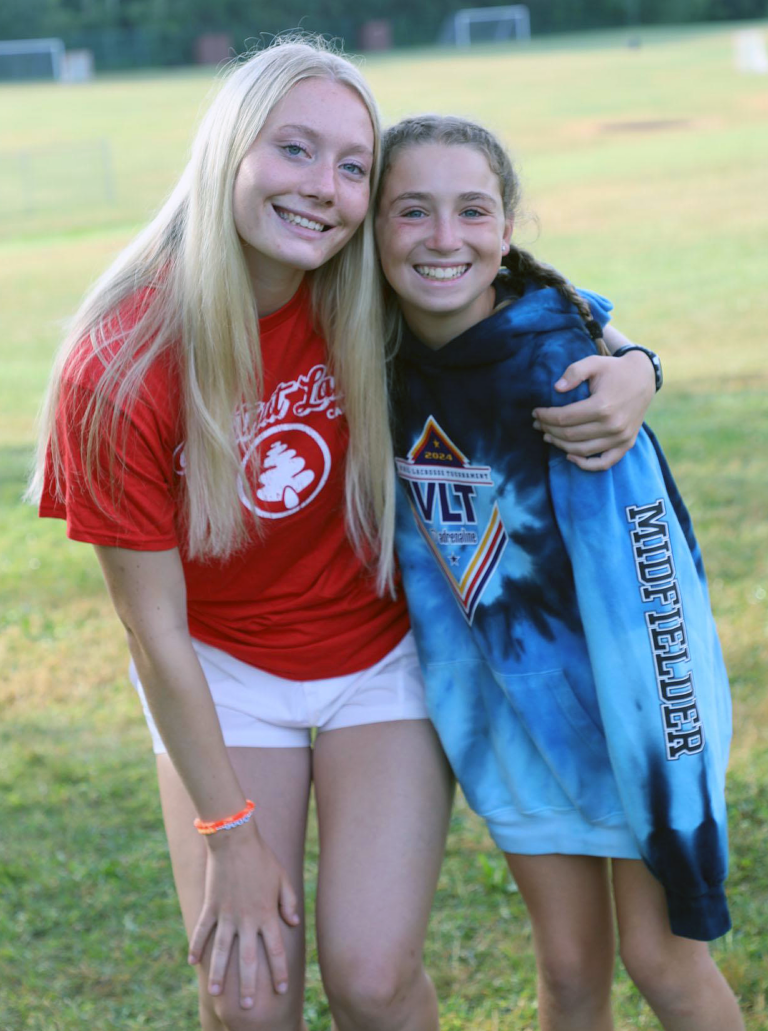
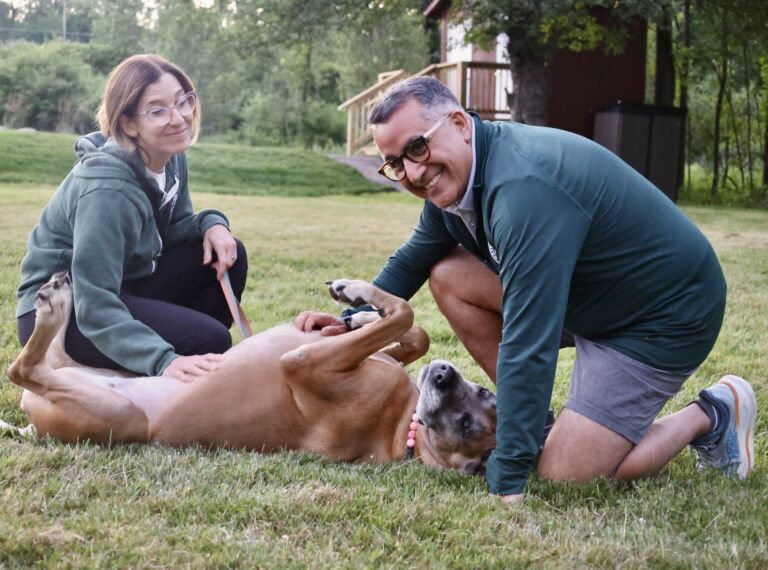
 We’ve come a long way since the start of Second Session. Back then, the new campers were figuring out the map of this place — not just where things were, but where they belonged in it. In those early days, I wrote about how campers grow; constantly grow — but watching it happen is still like magic every time. The kid who could barely meet my eyes when they stepped off the bus is now belting out the Alma Mater at the top of their lungs (especially the “I’m Chestnut ‘til I die…” part at the end). The first-time counselor who thought “leading a bunk” meant giving orders learned quickly that it’s about listening, laughing, and sometimes sitting quietly with a camper who just needs to be heard.
 Writers have been trying to put the magic of camp into words for decades. In The Summer Camp Handbook, Jon Malinowski and my good friend Chris Thurber write: “Camp is a place where you can be your truest self — because everyone else is, too.” That’s been true here every day this summer. My colleague Steve Baskin once quoted a camper who told him, “In three weeks here, I got back so much of the confidence I’d lost.” I’ve seen that in our campers this summer — the return of confidence, the discovery of independence, the joy of finding a place where they are free to be fully themselves. And Lenore Skenazy, in an article for Let Grow, said it plainly: “Camp works because it gives kids a community, a purpose, and the space to try.” This summer, our kids tried everything — from the high ropes to waterskiing to making up an original dance or song in front of hundreds of people. And whether they succeeded or not, they were braver for trying.
 As we pack the duffels and watch the buses pull away, I’m reminded of what Anne Lamott once wrote: “Lighthouses don’t go running all over an island looking for boats to save; they just stand there shining.” Ann and I feel it’s our mission — joined by an exceptional team of professionals and seasonal leaders — to be that lighthouse, standing firmly on a foundation of commitment to excellence and integrity, ensuring that every child and adult who arrives and departs knows how to find their way with our never-ending light. This summer, Chestnut Lake shone.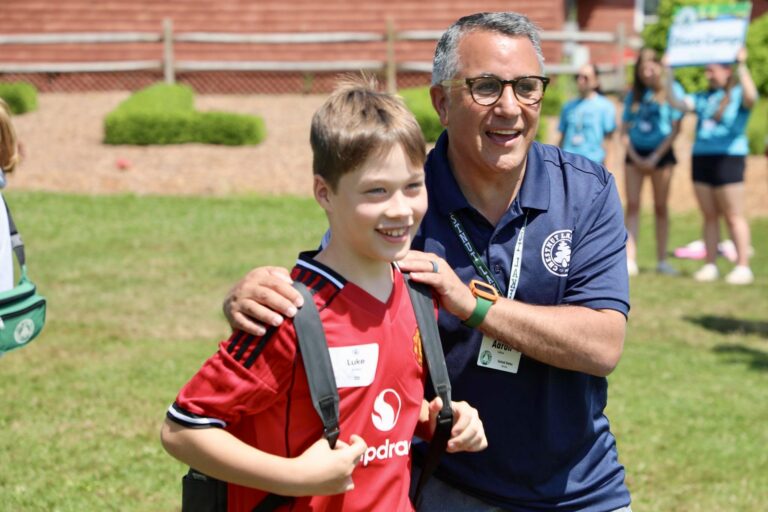
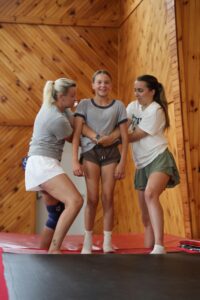
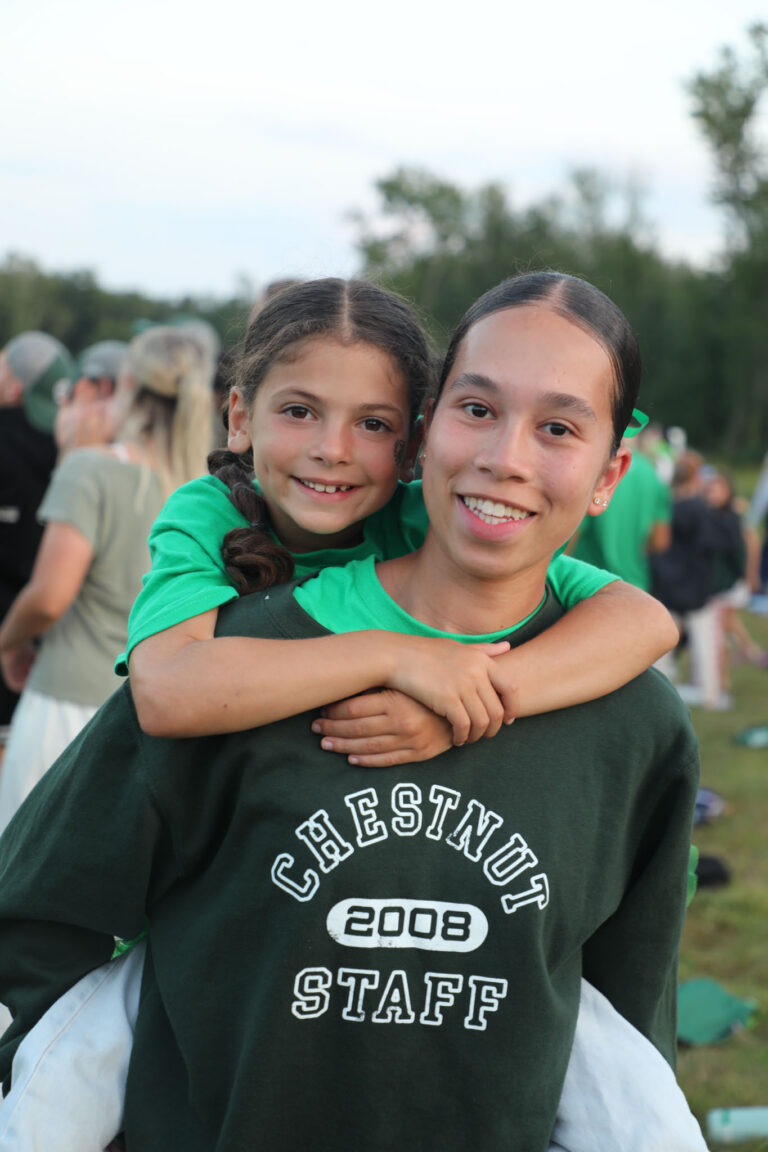
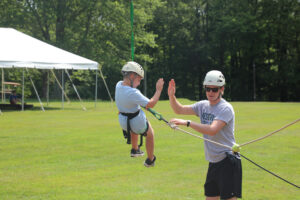 This week also marked the start (and conclusion later today) of Discovery Camp, a special five-day experience designed for younger campers to dip their toes into the Chestnut Lake experience. These sixty kids packed a full summer’s worth of excitement into less than a week — and now head home with paint on their arms, songs in their heads, new friendships formed, and hopefully, the start of a long camp story that’s just beginning. All of these experiences — the firsts, the middles, and even the goodbyes — are different. But they are all rooted in the same core truth:
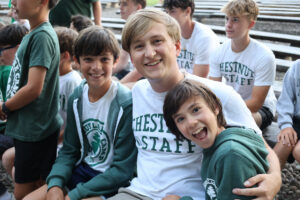 The job of a counselor is, in some ways, impossible to explain and impossible to overstate. They are substitute parents, older siblings, life coaches, cheerleaders, conflict mediators, teachers, and buddies— often all in the same day. They stay up late and get up early. They deal with bug spray and homesickness, group dynamics and lost water bottles. They lead chants and tie shoes, teach life lessons and wipe away tears.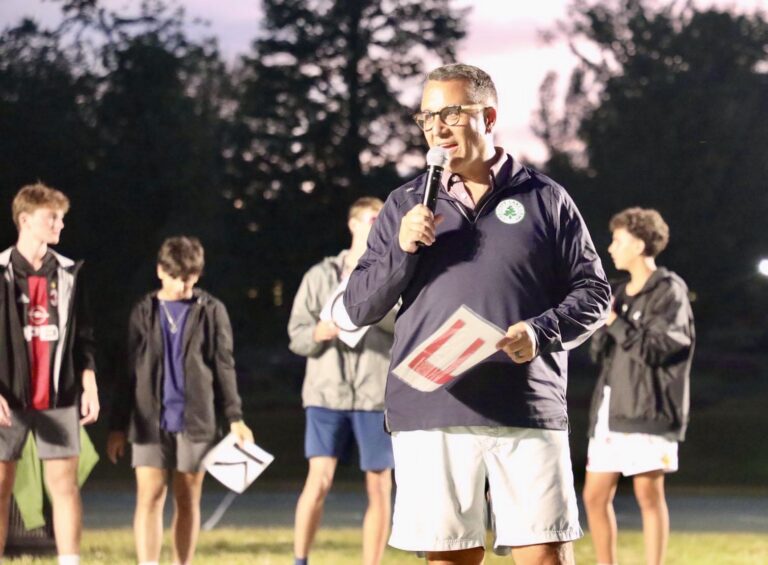
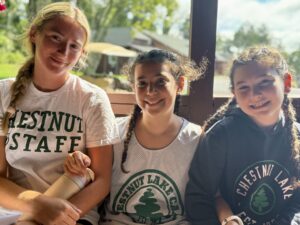
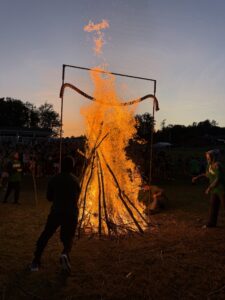 As we wrap this First Session, I want to offer four messages — one for each part of our camp community.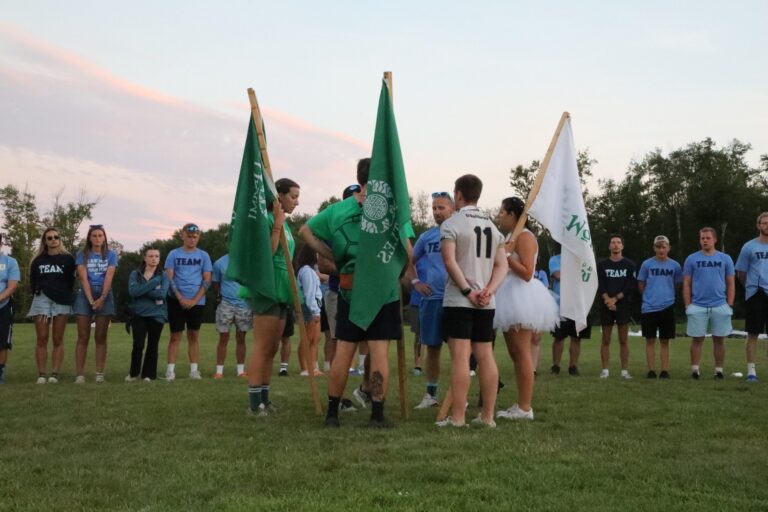
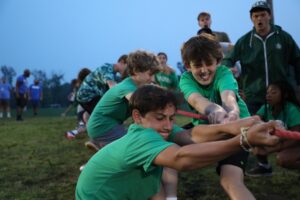 Years ago, I wrote about Color War as one of the most contradictory but profound parts of camp. After spending the entire summer building a unified community, we suddenly split it in two. Minsi. Unami. White. Green. Friends land on opposite teams. The very people who helped campers feel at home now face off as competitors.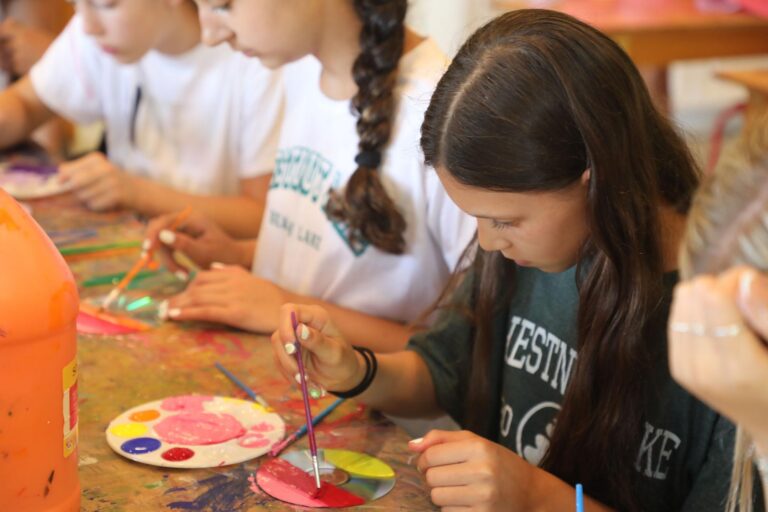
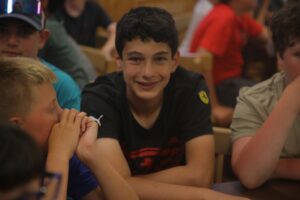 And yet, here at Chestnut, the camp day continues. Kids are running, climbing, practicing for Lip Sync, flying across the lake on skis, and building friendships that will last well beyond the end of the session. There’s joy in every corner. And for many of you at home, that joy is mostly coming through in the form of a photo or video. You refresh the Campanion app, you watch another social media post play on your phone, you squint at a thumbnail, maybe zoom in on a blurry face in the back of a group shot, and wonder: Is that my kid? Are they smiling? Is that the same T-shirt again? Are they…okay?
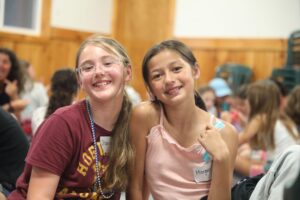 And yes, sometimes your camper might look tired in a photo. Because they are. Camp is full of long, amazing days. Sometimes they’re not smiling because they didn’t see the camera about to shoot a photo. Or because they’re concentrating. Or maybe they’re just thinking about whether their S’more from last night counts as dinner. Sometimes a kid’s not in a photo because they were in the bathroom. Or refilling their water bottle. Or just not in the mood to be on camera. That’s allowed, too.